The Confessions of a Rosso Cardinale Slab
My name is Rosso Cardinale.
It is a name of some importance, and not only because of its deep crimson colour. Cardinale suggests presence, a kind of intensity that needs no introduction, the weight of things made to be seen from afar, recognised at once, and remembered for a long time.
I believe they called me Cardinale for precisely that reason. Because there is something intense about me, almost solemn. I enter a space and change it simply by being there. Designers working on ambitious projects understand this immediately: when a material is needed that can hold its own within a powerful vision, that is where I am at my best.
Naturally, I did not choose the name myself. It was given to me by the people who found me, extracted me, worked me; the same people who know how to recognise, within stone, something worth bringing to light. And I must admit, it suits me perfectly.
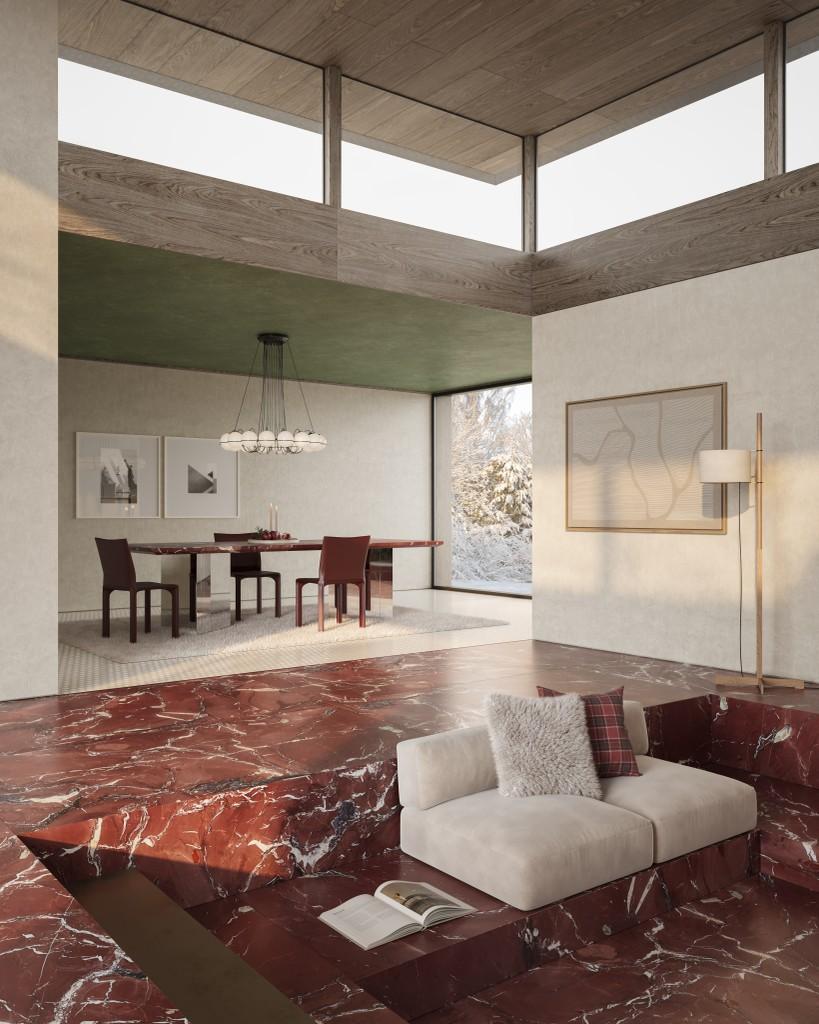
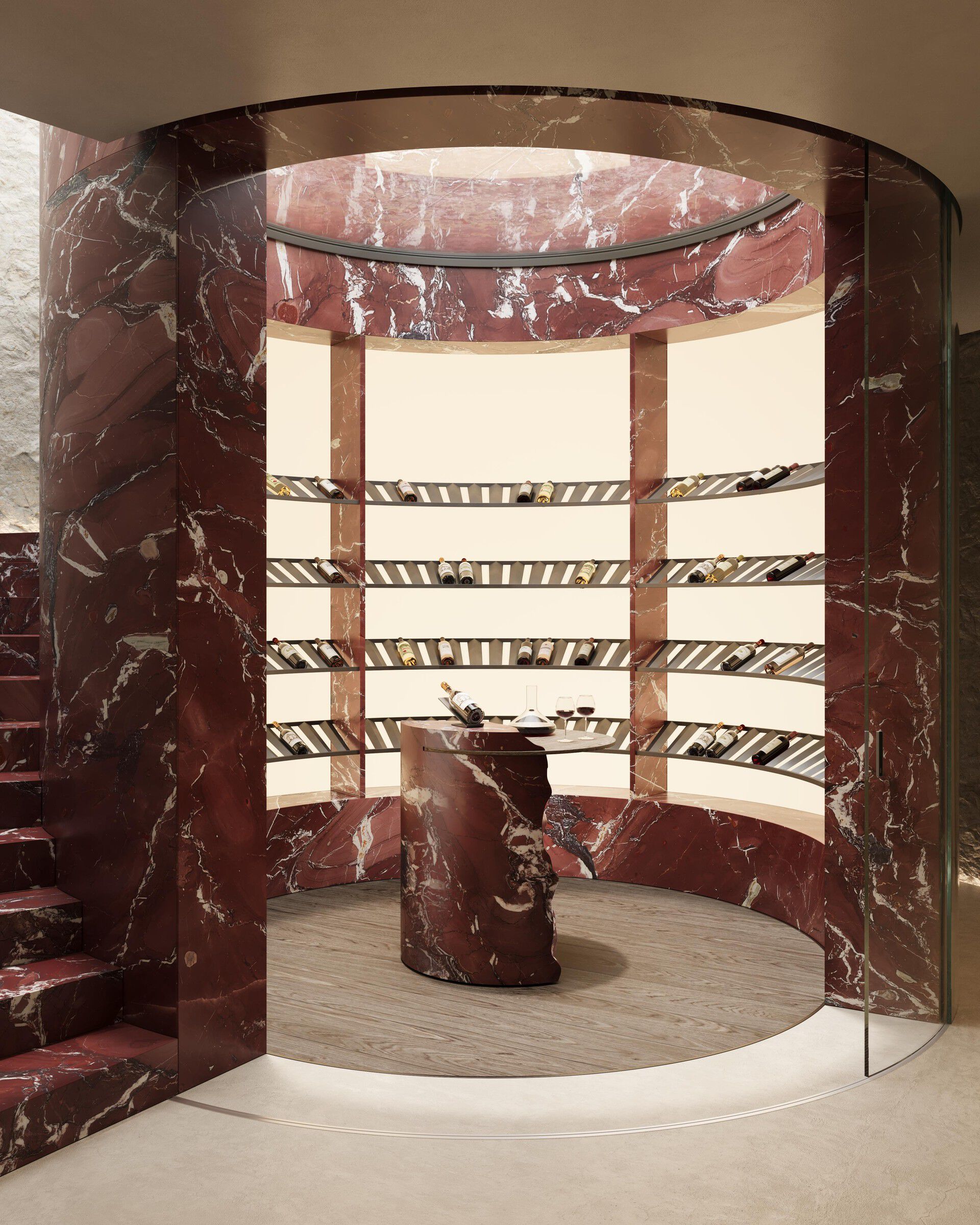
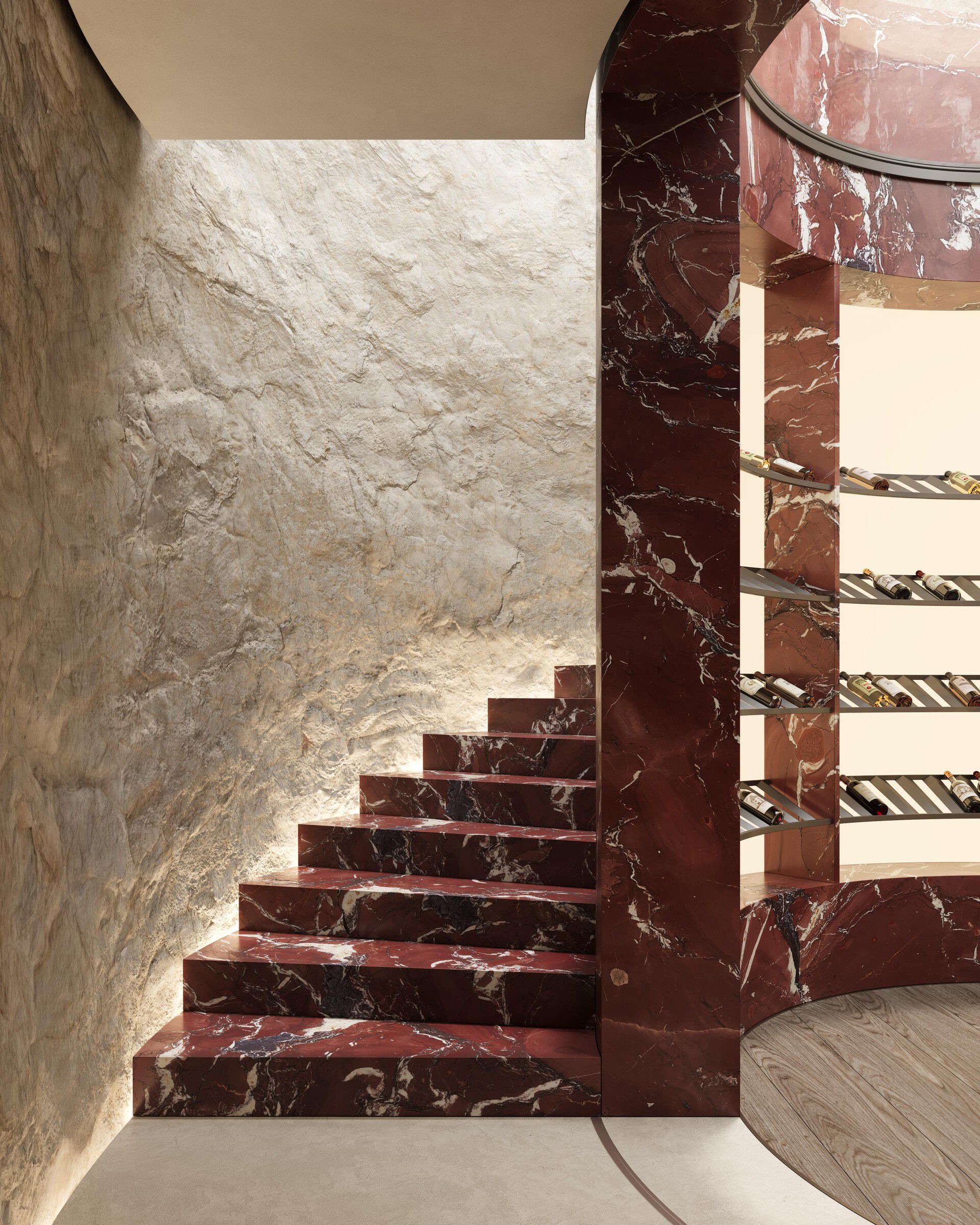
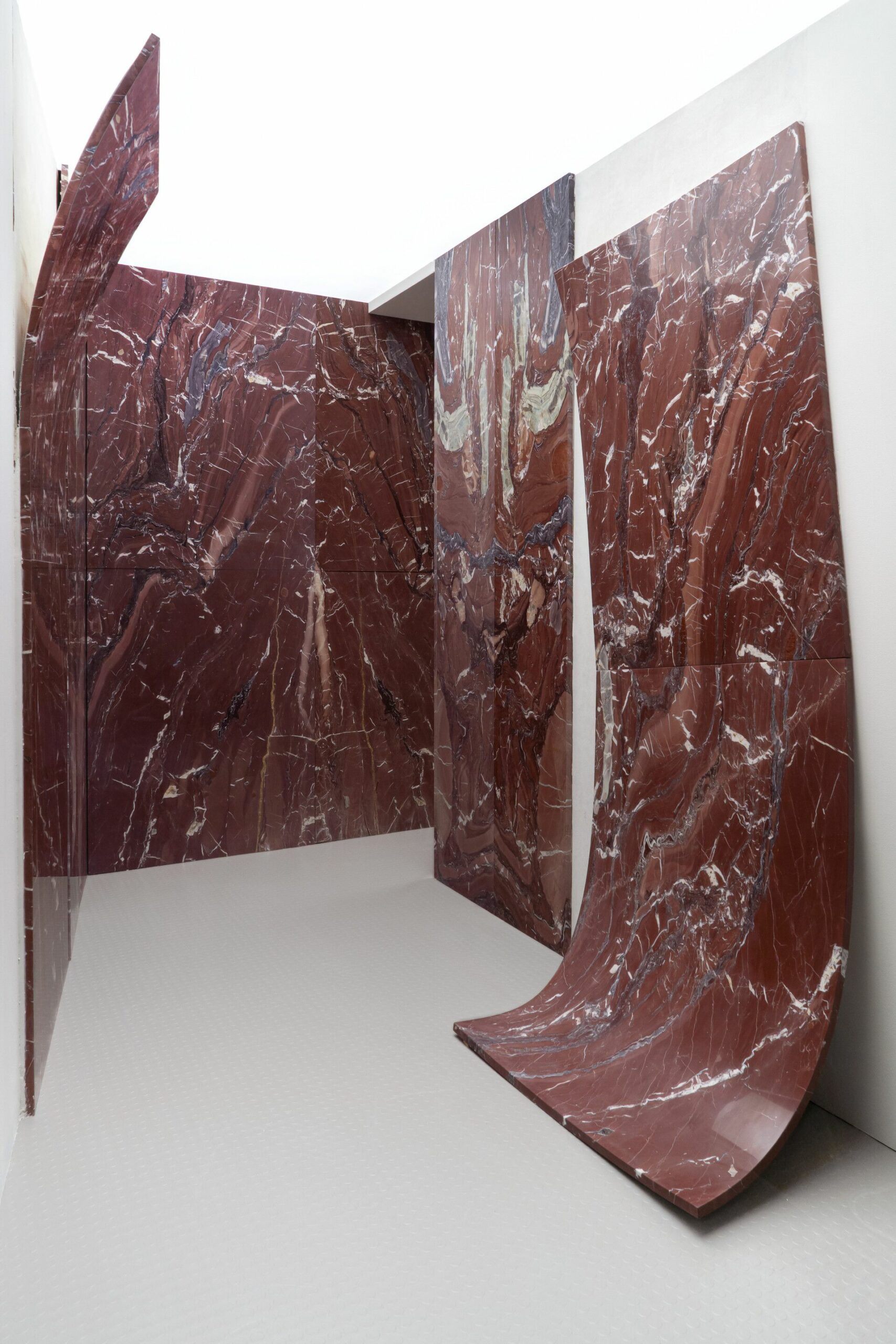
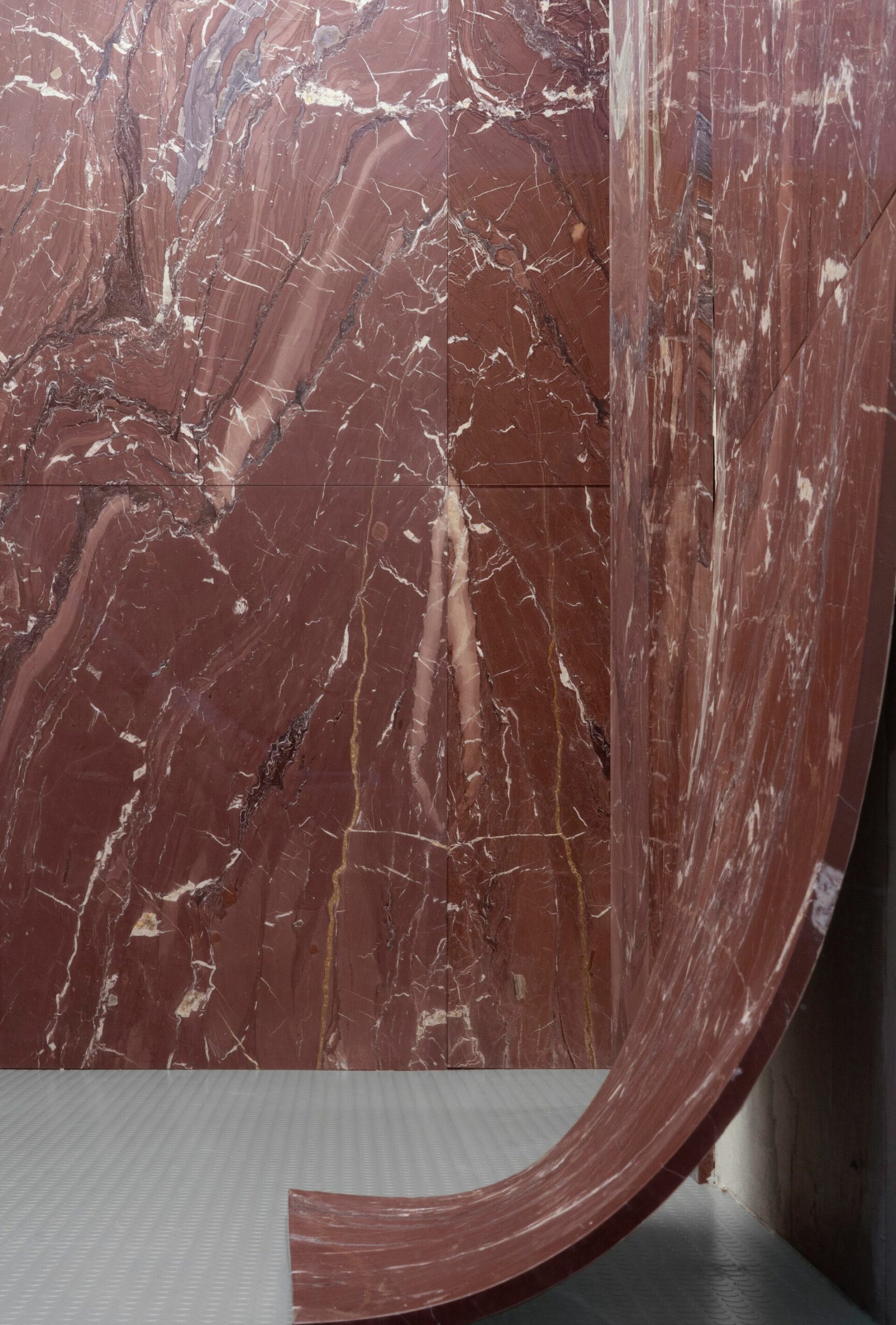
In technical data sheets, I am described like this: Italian marble in intense dark red tones, with shades tending towards brown, crossed by bright white veining. Available in polished, honed, brushed and Ipogeo finishes.
All true, of course. But not enough to understand who I am. It is a little like describing a person only by saying how tall they are and what colour their eyes are, isn’t it?
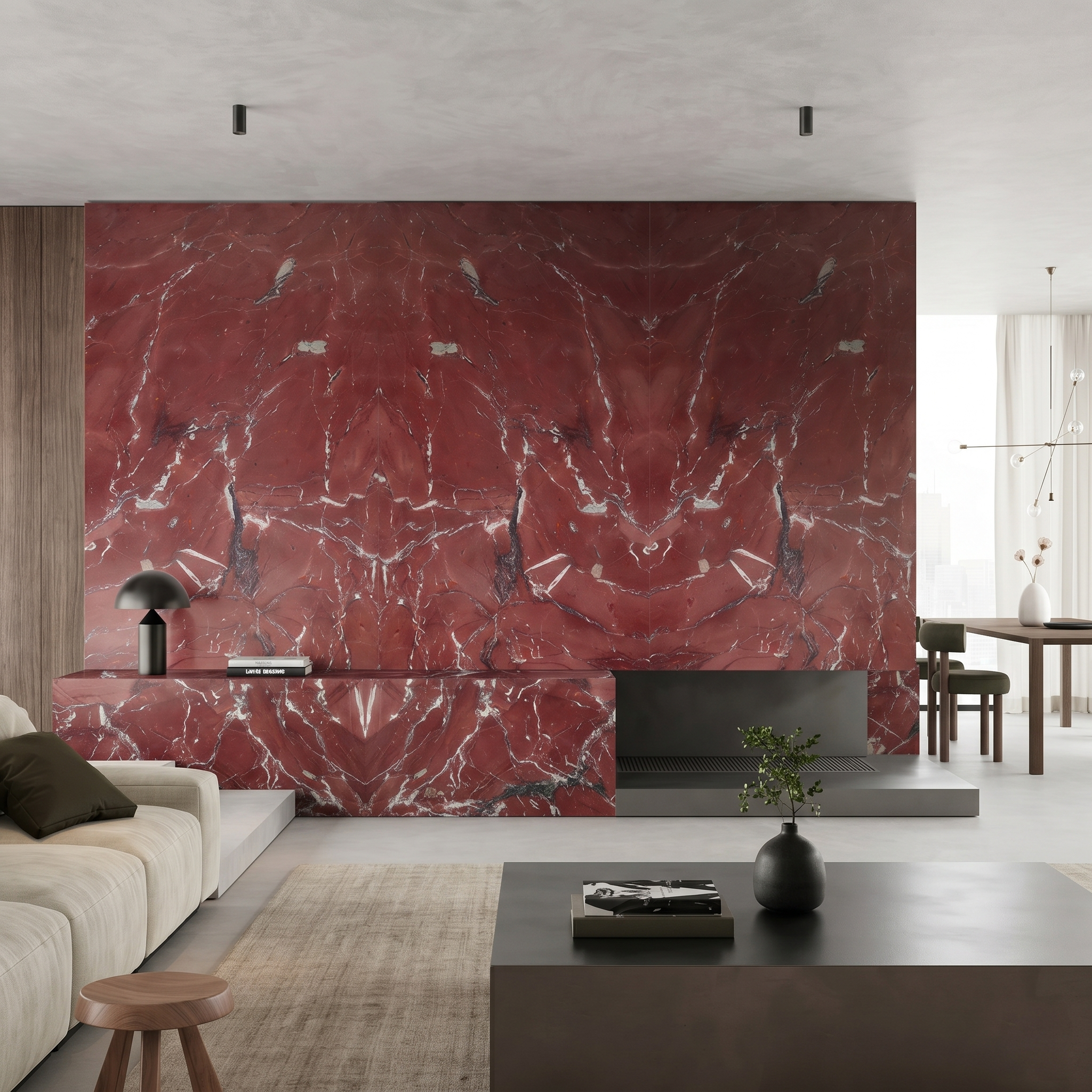
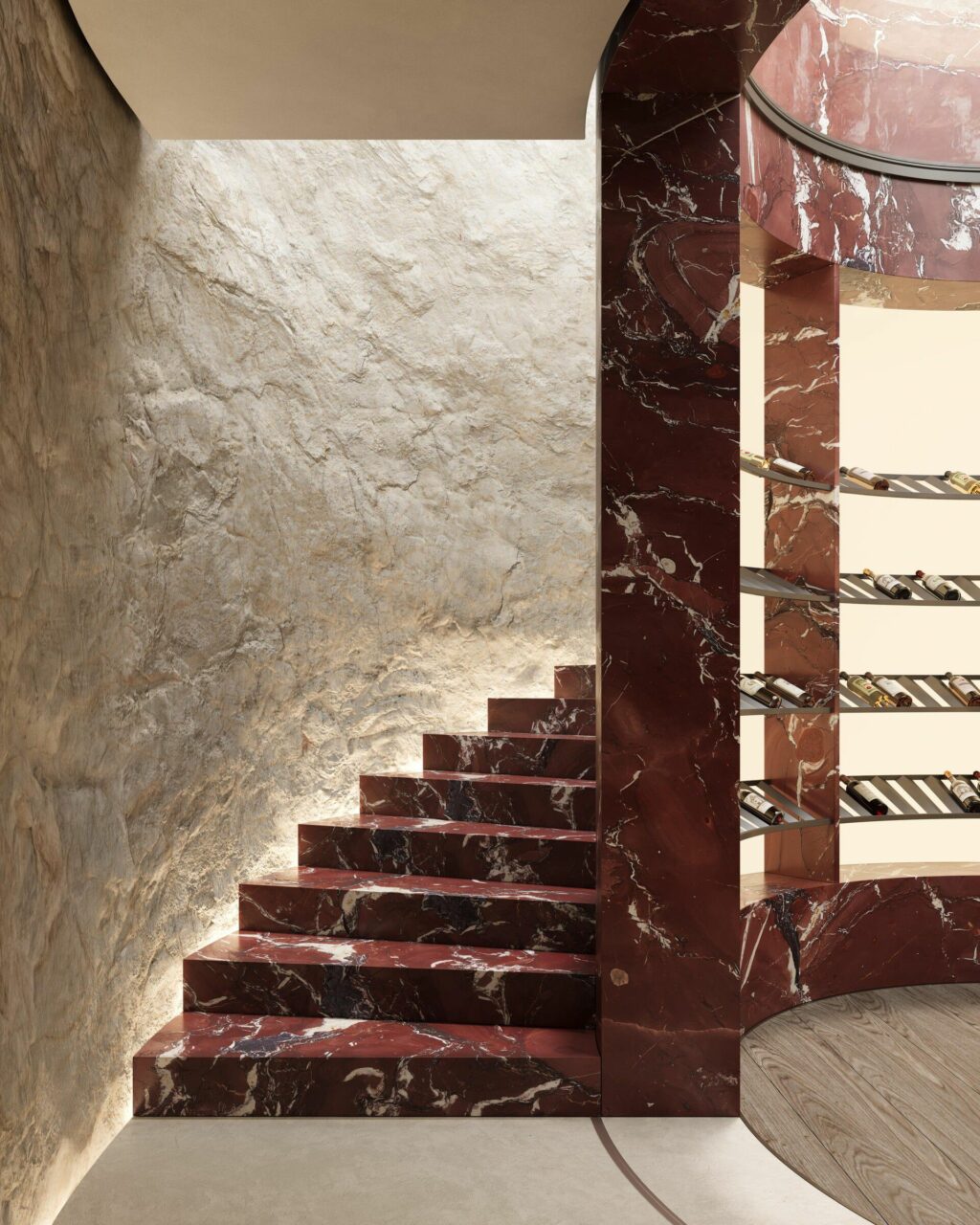
Many people know my public life: prestigious interiors, important walls, eyes that slow before a surface whose deep colour draws them in almost magnetically. The interesting part, however, is what happens before that: the steps no one photographs, the moments in which what I would become was truly decided.
That part, if you like, I can tell you myself.
To understand who I am now, we need to go back to the time before the world had found me.
Darkness, first of all. Not the darkness of a room with the lights switched off, but an absolute, ancient, dense darkness, the darkness of something that has never known light and does not even know it exists. Above me, the weight of unfathomably deep seas. Around me, time. A time so long and so slow that, for human beings, it is almost impossible to imagine.
And then heat. Not the heat of the southern sun, which would not reach me for a very long time yet, but the internal heat of the earth, rising slowly from the depths and transforming everything it touched.
That is where my story began. Mineral fluids moved through my fissures. Oxides settled slowly. The red was built from within, layer after layer, in a time before human beings existed, when nothing was in any hurry to become anything.
The white veins came later. Every fissure opened by pressure, every crack later filled with bright white calcite, was not something I experienced as a wound. It became as much a part of me as the red. Perhaps even more so, because it tells a story of continuous transformation that no uniform background could ever tell.
In that world there was no impatience. There was no waiting. There was only transformation: slow, inexorable, wonderful.
After darkness, light
I could not tell you when the first sound arrived.
It immediately seemed different from everything I was used to. It was not the slow crackle of rock settling, nor the murmur of underground waters I had come to know so well. These were new sounds, closer. Then vibrations. Then my own dust, lifted into the air.
And then, for the first time in my entire existence, light.
No one had prepared me for such a thing. After so much time in darkness, to become suddenly visible was both wonderful and disorienting. For the first time, I was not only matter: I was surface, I was colour. I could be seen.
And the human eyes observing me were not ordinary eyes. They were trained eyes, used to distinguishing, assessing, understanding what is worth bringing to light and what is better left where it is.
For the first time in my history, I depended on a gaze.
Lightness, air, sky
After I was extracted, there came one of those moments no slab can ever forget.
The diamond wire passed through me with sharp precision, cooled by water that carried away the dust of myself. A slow, methodical, inexorable process. And I, for the first time in my life, found myself thin. Extremely light, compared with what I had been. I did not experience it as a loss: it was a new form of existence. That deep red, those white veins crossing through it, could finally be read in full, across a surface the world could look at.
Then came the lifting. That, yes, was a true shiver. The moment when someone took hold of me and raised me from the ground with the particular care reserved for precious, unrepeatable things.
It was then that I understood something important. My story does not depend only on those who choose me, but also on those who lift me, transport me, work me, install me. On the entire chain of expertise that accompanies me.
My journey began like this: lifted, free, yet protected. The first time outside the quarry. The first time beneath the sky.
At last, someone’s eyes
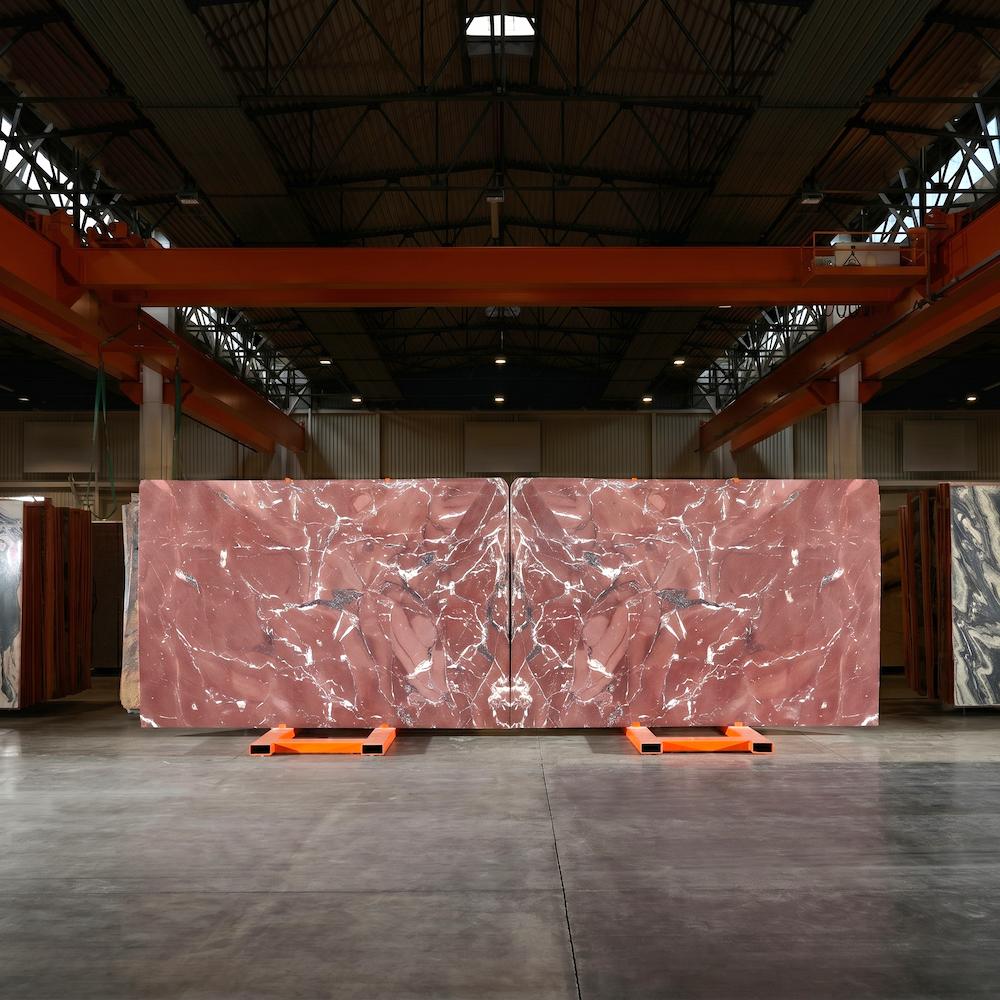
Arriving at the slab gallery was a strange moment.
On one side, enormous relief. I had made it there whole. After extraction, cutting and transport, my entire surface was finally available to be looked at. And that was exactly what I had been waiting for.
On the other, comparison. Around me, dozens, perhaps hundreds of other slabs. Each with its own character, each waiting for its own opportunity. And I, among them, waiting for someone capable of noticing me. It is a situation that teaches patience, and also a certain humility. Useful qualities, even for a Rosso Cardinale.
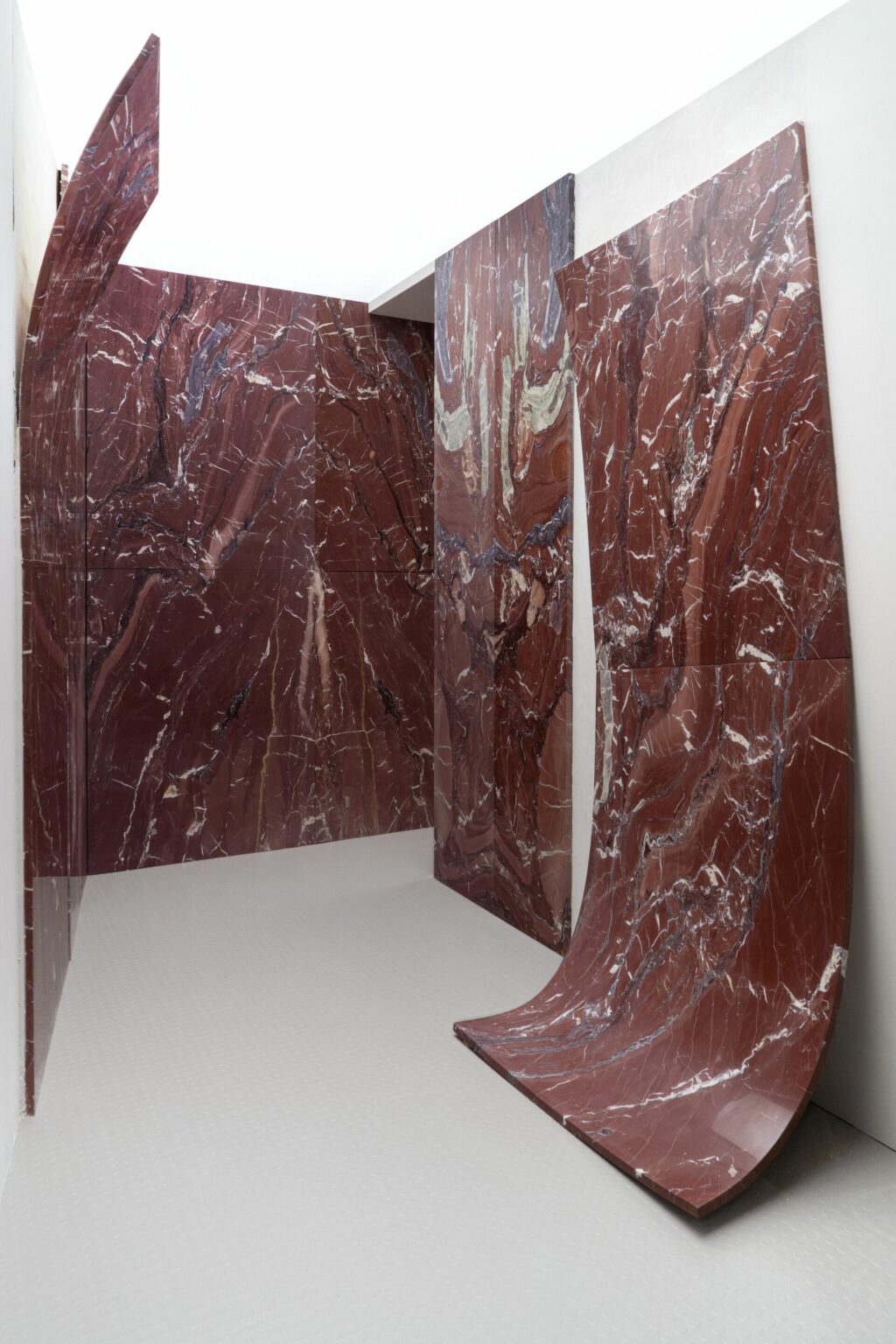
I recognise designers by the way they look. Some pass quickly without stopping, some are looking for confirmation of a choice already made, some come closer with a slow, curious gaze that feels promising. Those are the most interesting ones. They do not stop at the colour (and with me, stopping at the colour would be a mistake). The red captures the eye immediately, of course. But what matters lies elsewhere: the rhythm of the white veins, the way they cross the dark field like a river, the balance of the surface in a large format. That is where you begin to understand what I can become within a project.
They assess whether that specific surface — not the material in the abstract, but that slab, with that vein, with that pattern — is the right answer for the project they have in mind.
Those are the gazes that make the difference.
The moment of choice
At that moment, I was afraid of only one thing: being reduced to a sample.
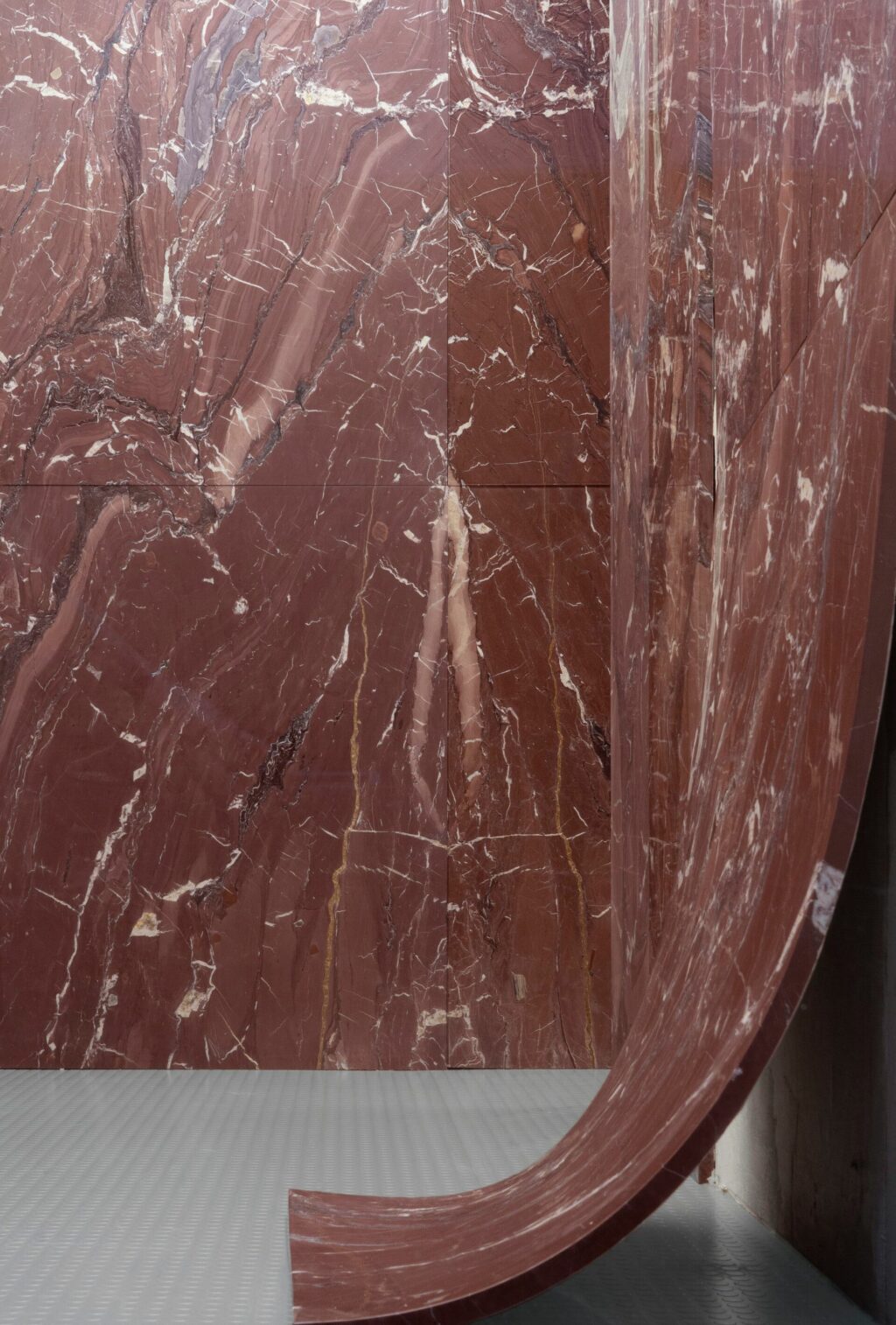
We slabs tolerate samples, because we understand that they are useful. But they say very little: a tone, perhaps a colour temperature. They will never say enough about the overall pattern, the rhythm of the veins, the part of me that wants to stand at the centre of attention and the part that prefers to remain slightly aside.
And with a material like me, this matters more than with others. My red is not uniform: it changes in intensity, grows warmer or cooler depending on the slab, the light, the angle. The white veins do not follow a fixed pattern — each slab has its own pace, its own balance, its own character. A sample only a few centimetres wide says none of this. In fact, sometimes it misleads. That is why I need to be seen in full: in person in the slab gallery, or through the high-resolution documentation that Marmi Vrech provides for every slab, with all the tools needed to imagine it in the real context of the project.
And it was exactly when someone stopped, took the time to look at me in full, and began to imagine me in their project that I felt something very close to relief.
And when I was later chosen, along with pride I immediately felt responsibility too. Someone had understood what I could become; now it was up to me not to disappoint them.
The coldness of the machine
When I arrived, before they even touched me, at Marmi Vrech they looked at me. And they understood me. This matters to me a great deal.
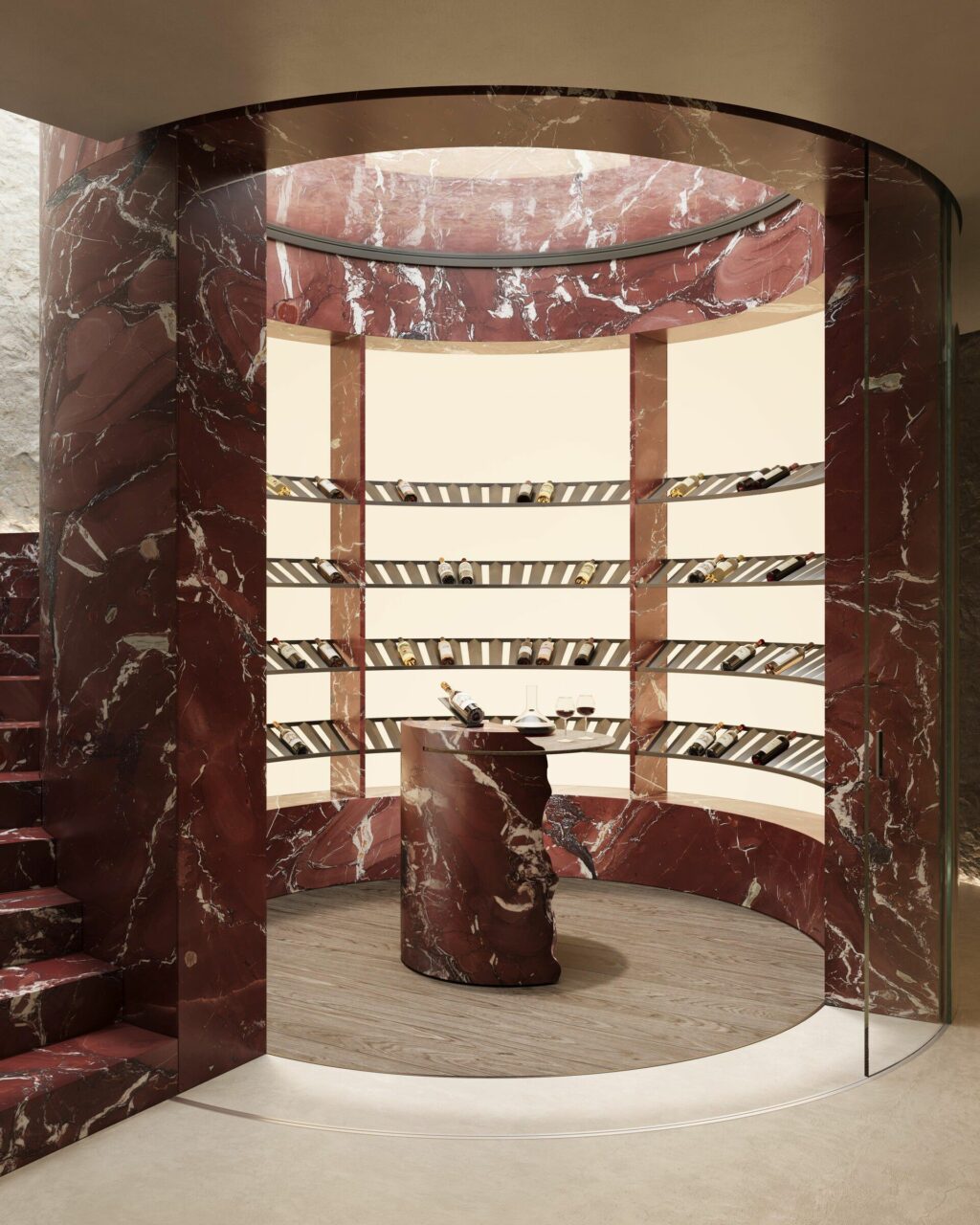
They read my veins, their pace, their direction, the points where the white crosses the red with greater force and those where it barely makes itself felt. They considered my structure, assessed how I would react to cuts, to processes, to my final destination. They decided which areas should be enhanced and which should be respected. With Rosso Cardinale, you cannot improvise: every choice of orientation, every decision about where to cut and where not to cut, radically changes the final result.
Only then did the machine arrive, with that almost glacial precision that intimidated me a little at first.
The CNC was like that: cold, precise, imperturbable. It was not impressed by beauty. And it had to be that way: only a machine with that absolute precision could perform work that would betray neither what the designer had imagined nor what the material could truly sustain.
Every step had a reason. Every millimetre was decided, not improvised.
It was there that I understood what it means to be worked with real precision. A new feeling, almost unexpected. Something that resembled perfection.
The warmth of hands
Then, at last, the hands arrived. Warm. Slow. Attentive in a way no machine can replicate. Not merely precision, but a way of listening to the material.
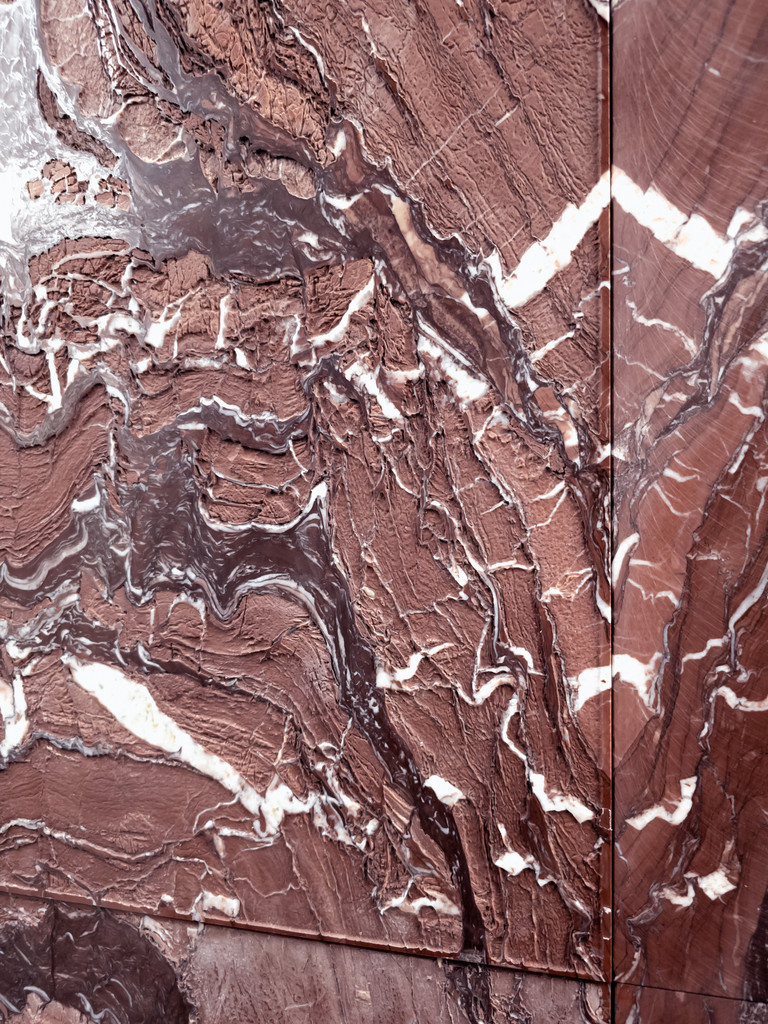
The artisan moved centimetre by centimetre, following the veins, understanding where to support them and where to correct them, just slightly. With an expressive slab like me, this changes everything: the white and the red respond differently to the work, requiring a sensitivity that is acquired over time, not set on a control panel. Every surface is unique, and what in an industrial material would be repetition is, here, interpretation.
With Ipogeo, what emerges is not a conventional finish. It is the opposite of everything tradition has done to marble for centuries: instead of making it uniform, it reveals. Instead of hiding irregularities, it brings them forward. The surface gains relief, shadow, depth. The white veins emerging from the red ground are no longer a two-dimensional pattern: they become the subject, acquiring a physical presence. The surface is worked so that the geological structure resurfaces, as though the stone were returning, for a moment, to the quarry, to the mountain, to the seabed.
I admit it: that was the moment when I liked myself most.
Because the hand does not merely smooth. It interprets. And being well interpreted, by someone who knows the material between their fingers, is a pleasure unlike any other.
At last, the right light
The light in the workshop was diffuse, neutral, honest. The right light for assessing, deciding, understanding. But it was not the true light.
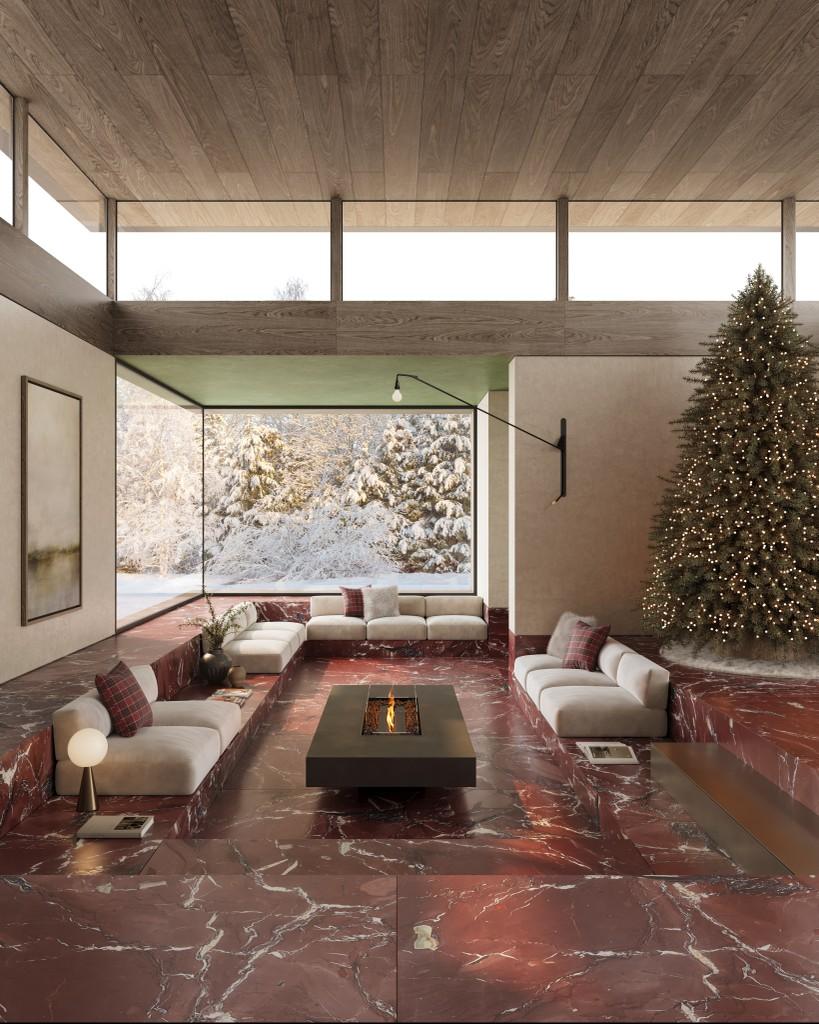
The true light is something else. It is the light of spaces where everything has been considered: the angle, the intensity, the way it falls on a surface and transforms it. It is a light that does not forgive and does not lie. The light that brings out every shade of red, makes the white veins vibrate, gives depth to a finish like Ipogeo in a way no workshop could ever fully reproduce.
The Monaco Yacht Show. The Salone. A private residence in London. A yacht suite. That is where everything that came before finally becomes visible.
Millions of years in darkness, under the weight of a mountain. A few weeks in the hands of Marmi Vrech to become what I am. And then to be exactly in the right place, in the right project, under the right light.
And perhaps this is my true confession.
Yes, I live to be admired. There would be no point pretending otherwise. But the real satisfaction, the one I feel in my deepest red and in the veins that cross it, comes when I realise I have been understood. Not only admired. Understood.
My name is Rosso Cardinale. And the best part of me can finally be seen.