The Four Seasons Case Study: From Complexity to Experience
On 25 February 2026, Fincantieri delivered Four Seasons I in Ancona. Measuring 207 metres in length, with a gross tonnage of 34,000, the vessel accommodates 95 suites with private terraces, eleven restaurants and lounges, and a one-to-one guest-to-crew ratio.
It is the first ultra-luxury cruise yacht from Four Seasons Yachts, a brand that has shaped its identity on hospitality for more than seven decades. Entirely suite-based, the project is closer to a high-end private residence than to a conventional cruise vessel. Its architecture is designed to dissolve the boundaries between interior, sea and landscape.
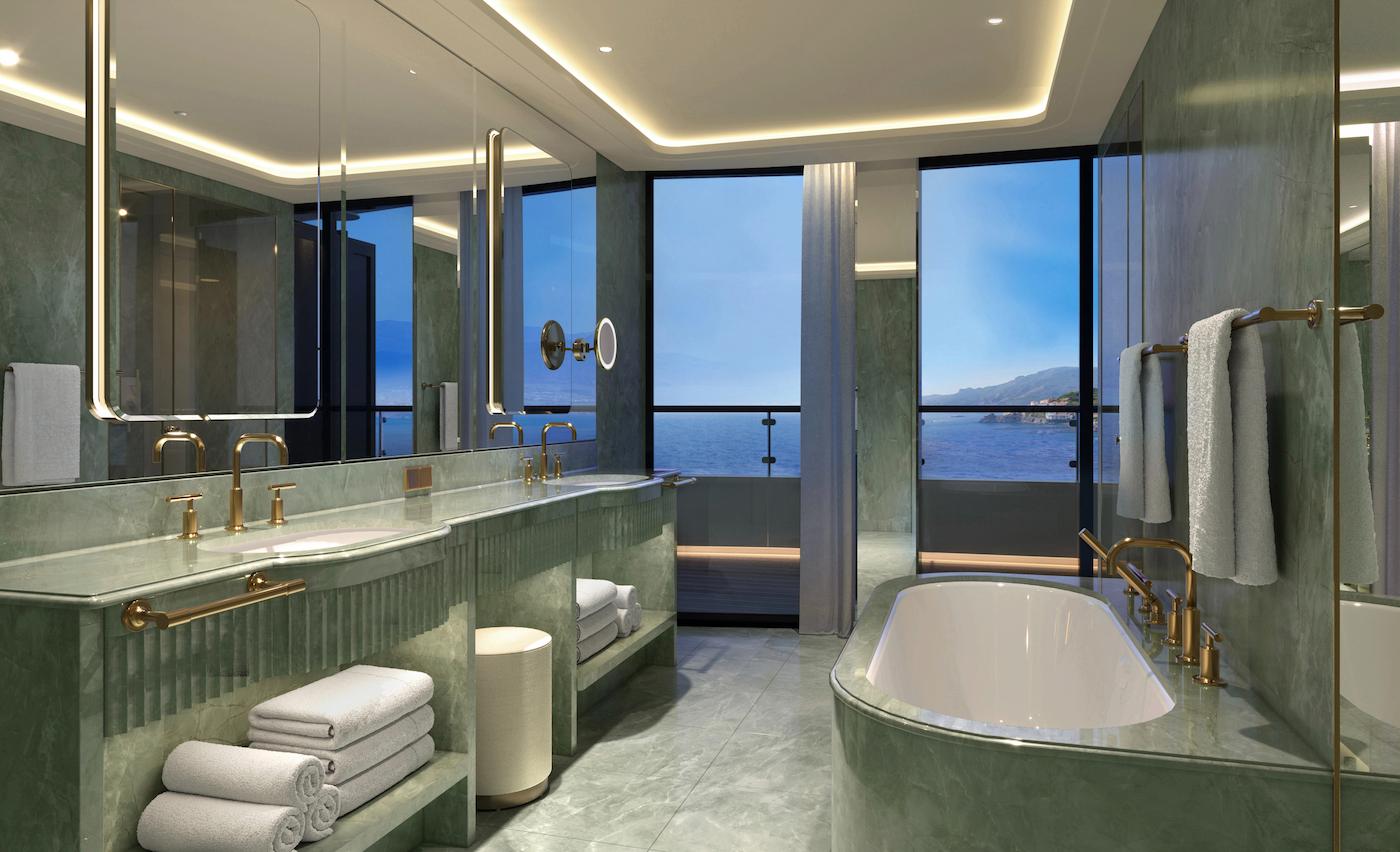
Within the interiors of Four Seasons I, Marmi Vrech was entrusted with one of the most intimate and technically demanding areas on board: the suite bathrooms. And as the yacht begins its inaugural season, we're already at work in Cervignano del Friuli on Four Seasons II, the second vessel in the same class.
A repeat build, on paper.
In reality, the second project carries forward everything the first revealed during construction: processes that proved more complex than expected, tools that had to be reconsidered, components that required extensive hand finishing, interventions to be managed on board, and individual solutions that gradually became part of a more structured method.
Complex projects are rarely mastered in advance.
More often, they are understood through the act of building them.
Inside the Suites: When Stone Becomes Living Architecture
To understand the work on Four Seasons I, you have to start with the suites. These are not luxury cabins in the conventional sense. They are residential environments designed with the same philosophy as Four Seasons hotels on land.
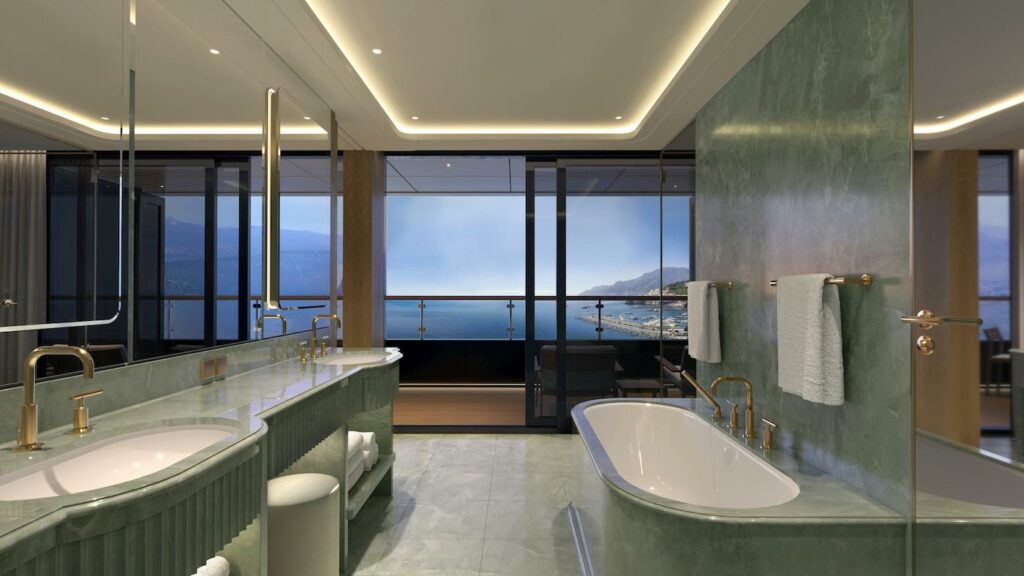
The design concept seeks to minimise visual separation between inside and outside through private terraces and full-height panoramic windows. Each suite is presented as a remarkable custom design: bespoke, rather than standardised.
In this context, the bathrooms are not secondary spaces. They're integral to the residential experience.
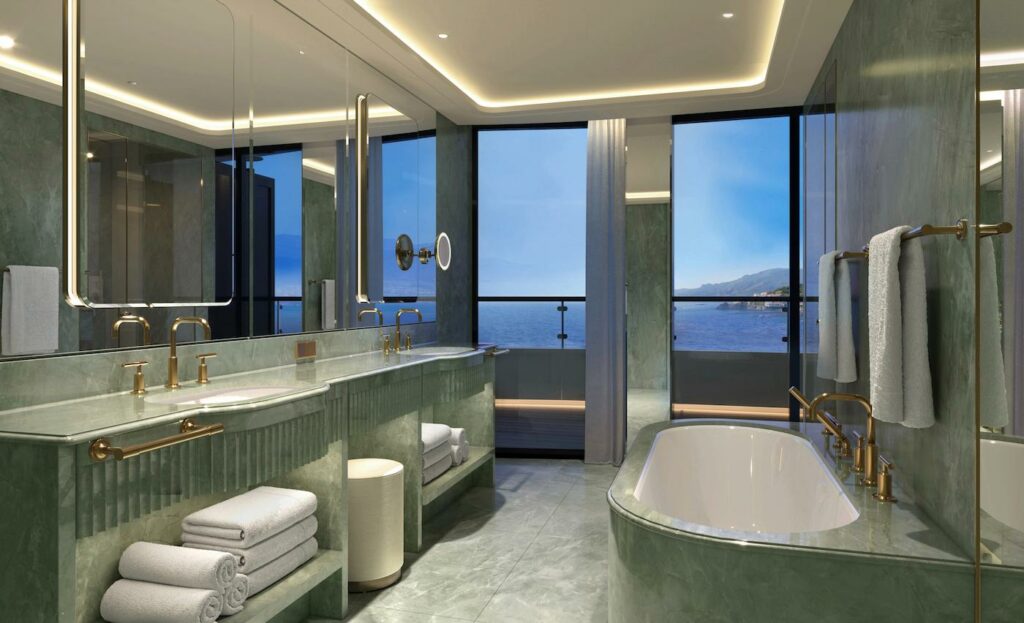
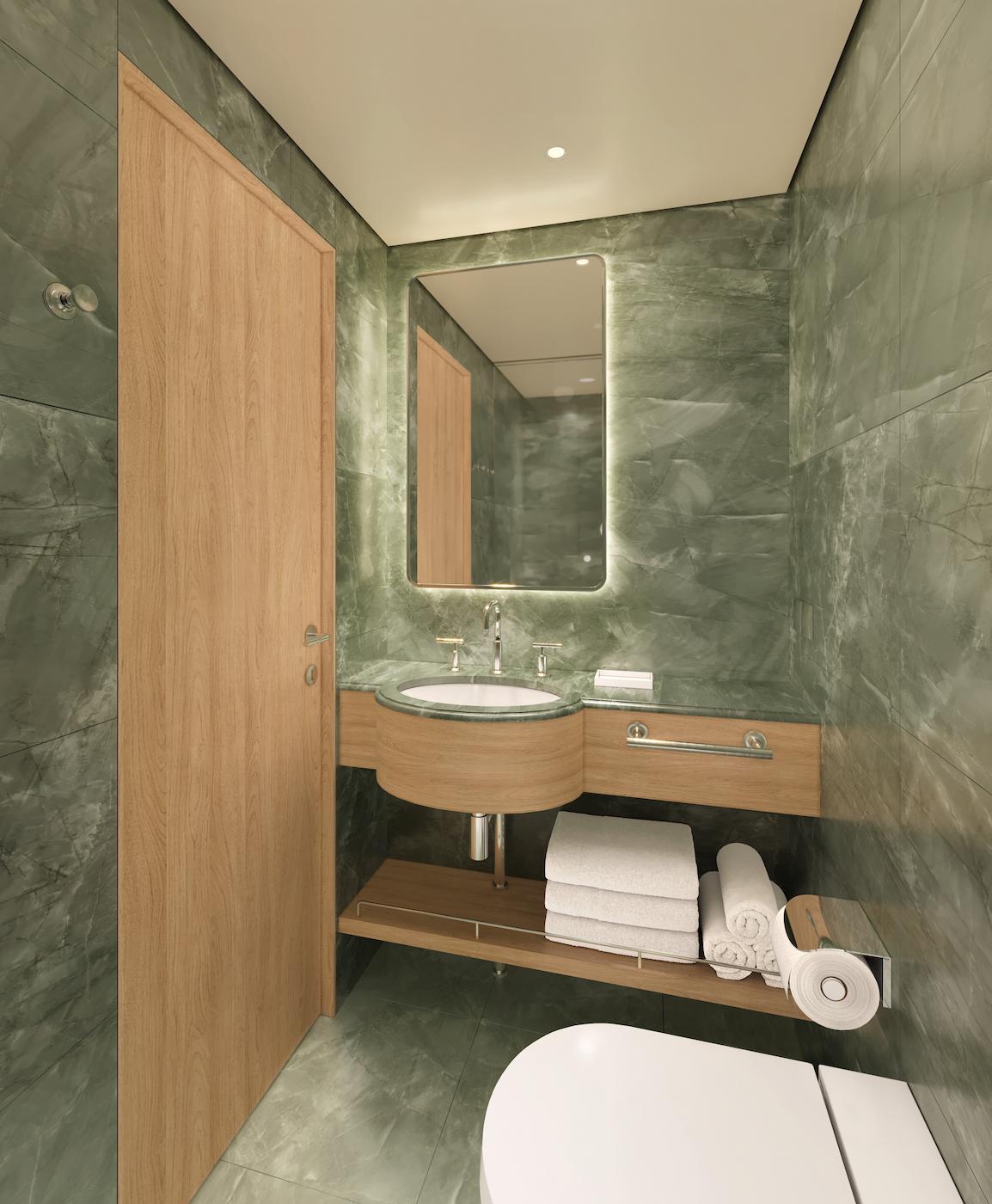
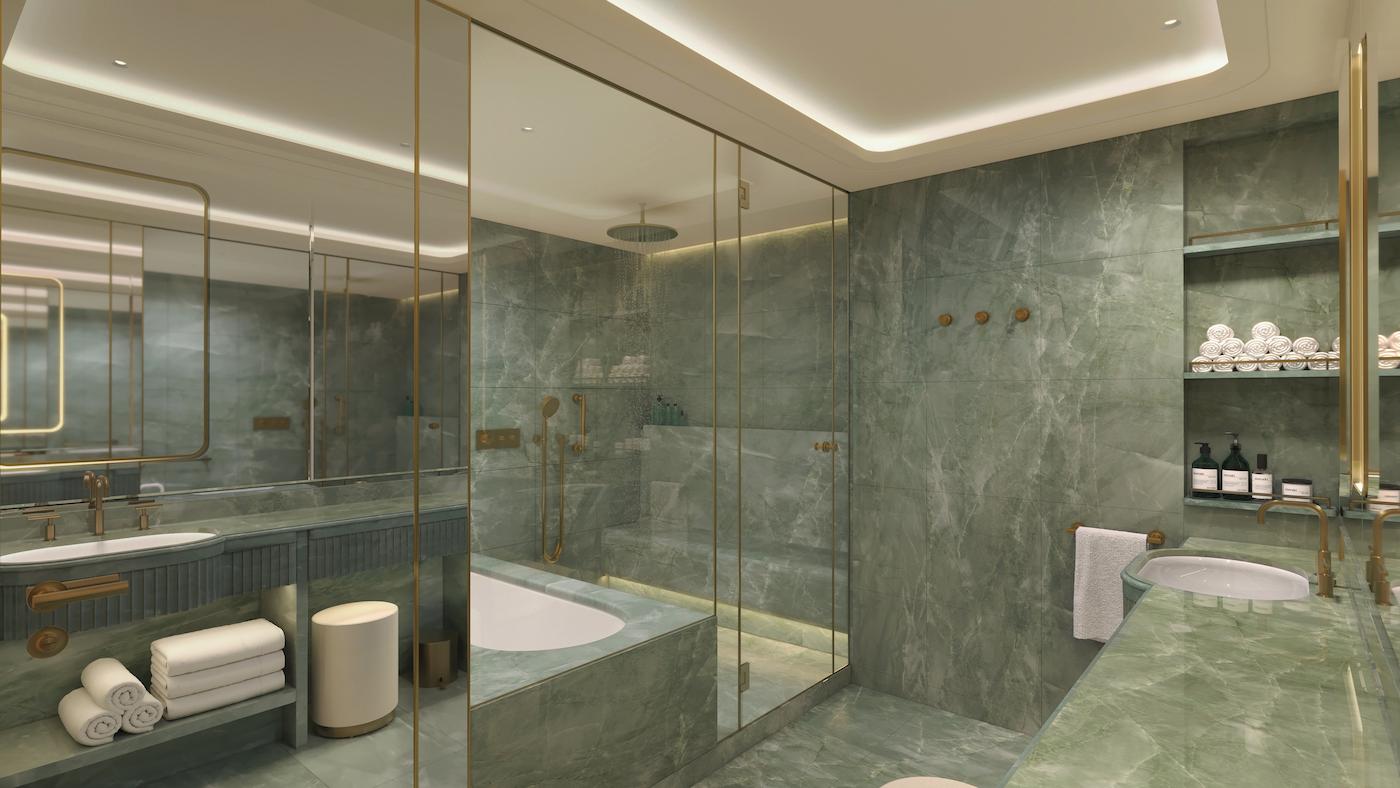
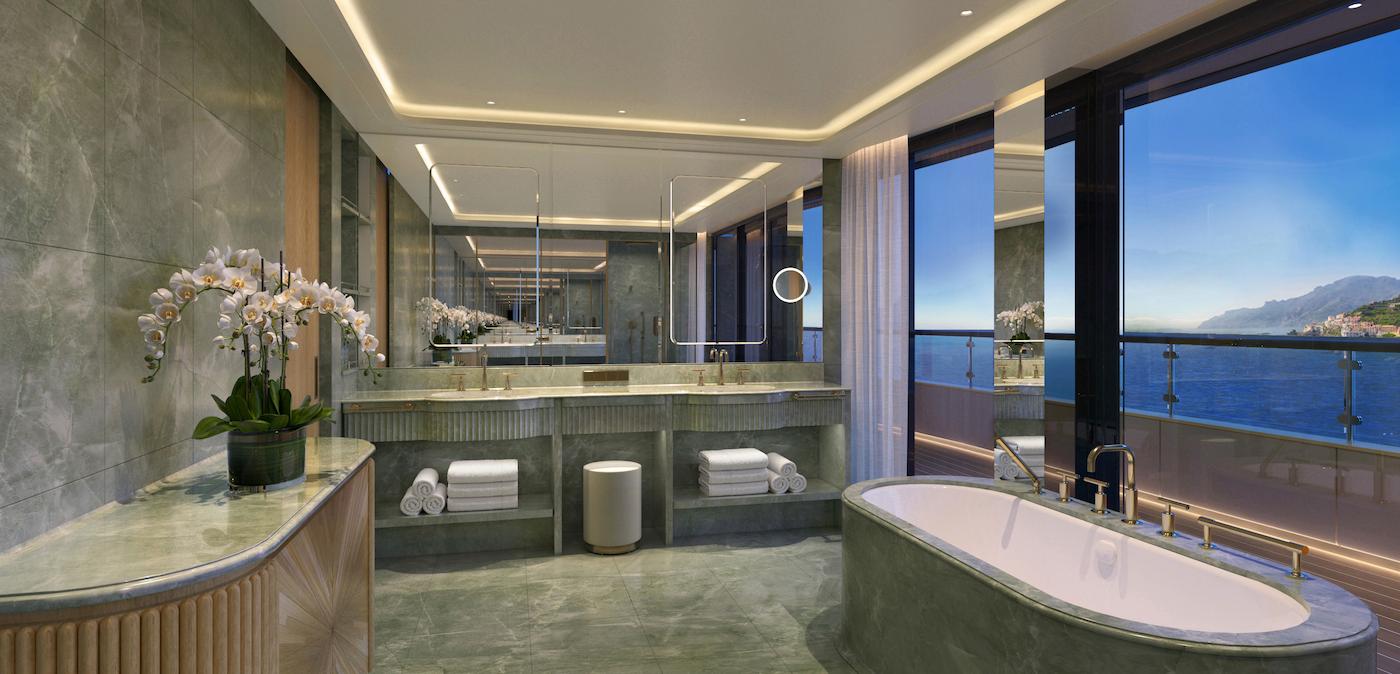
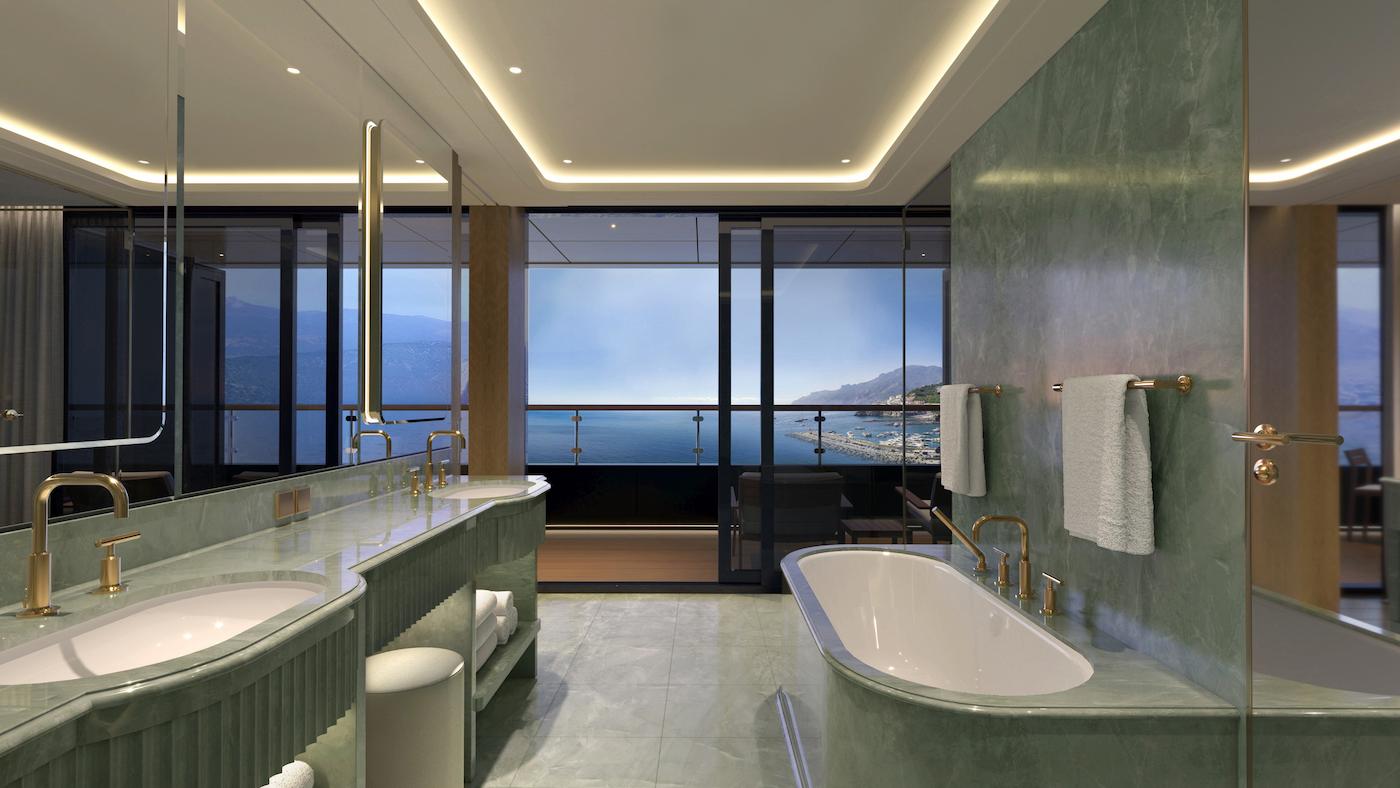
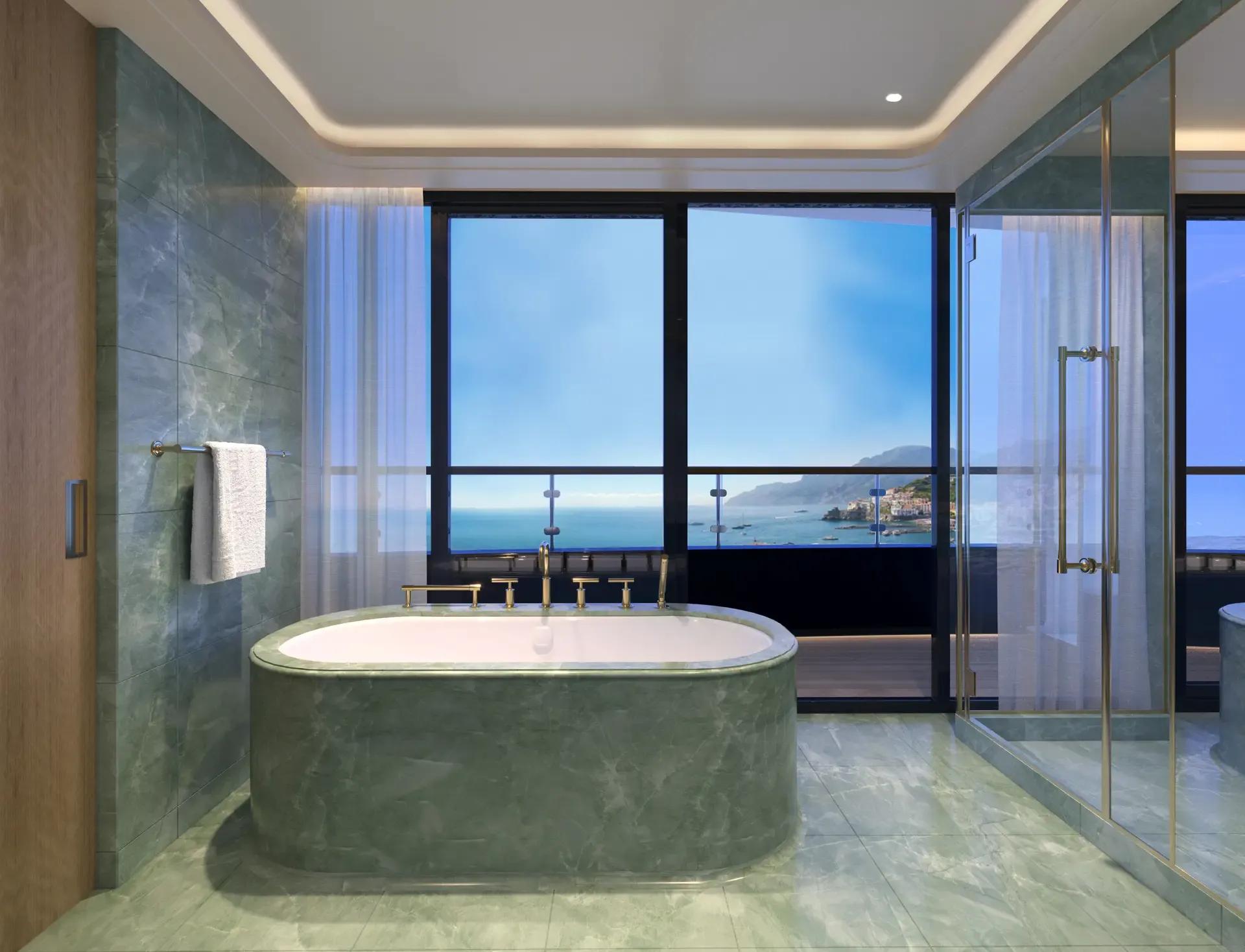
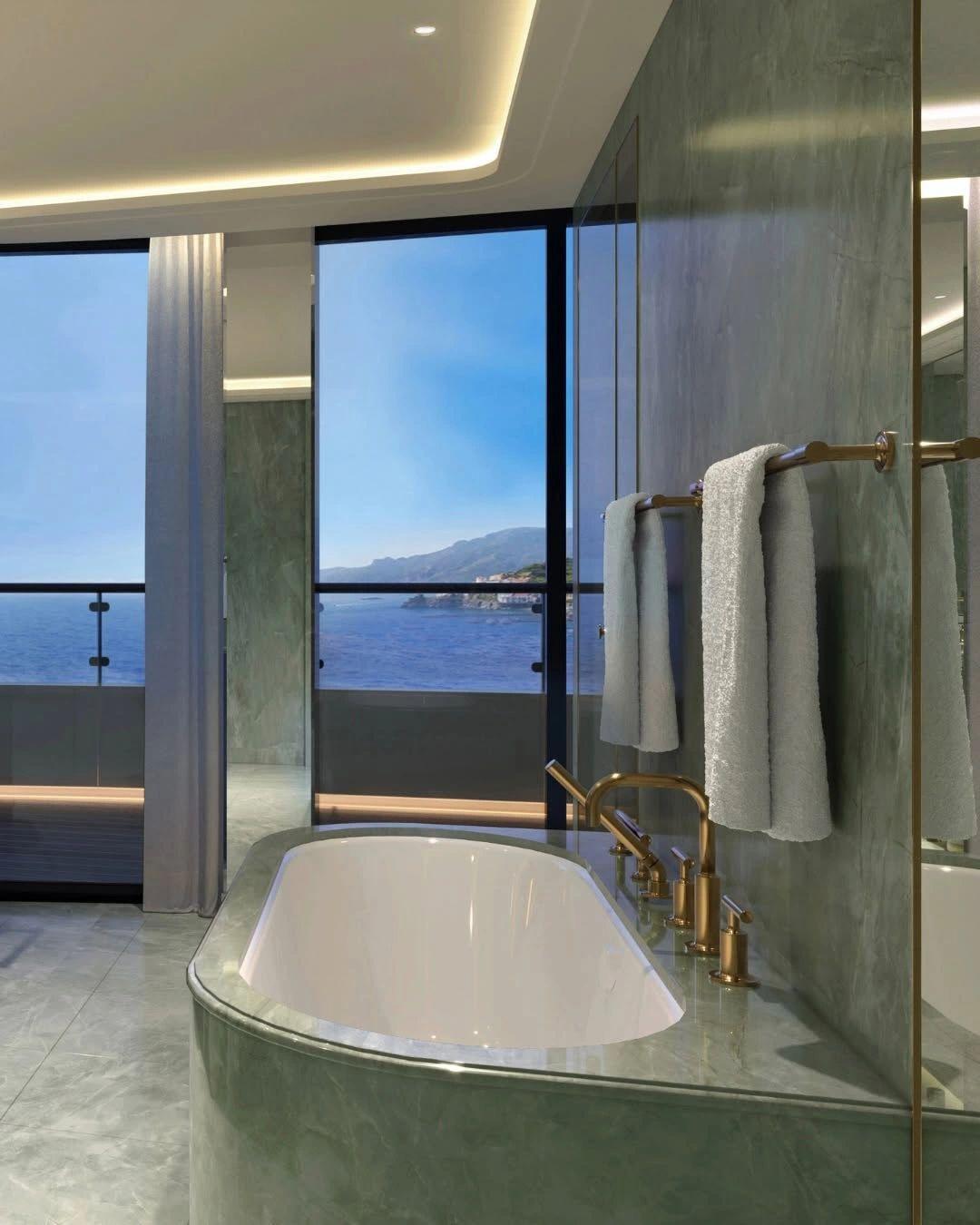
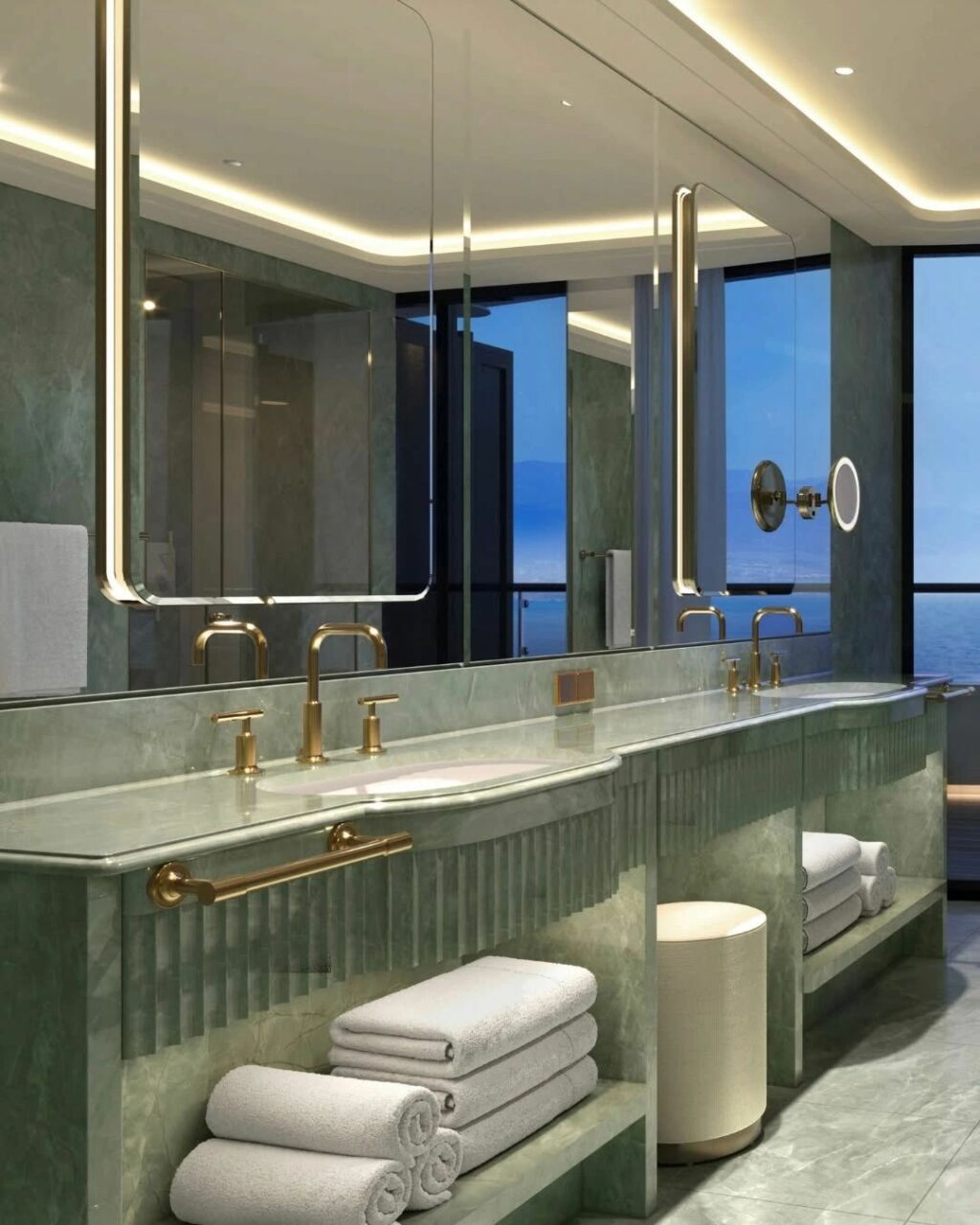
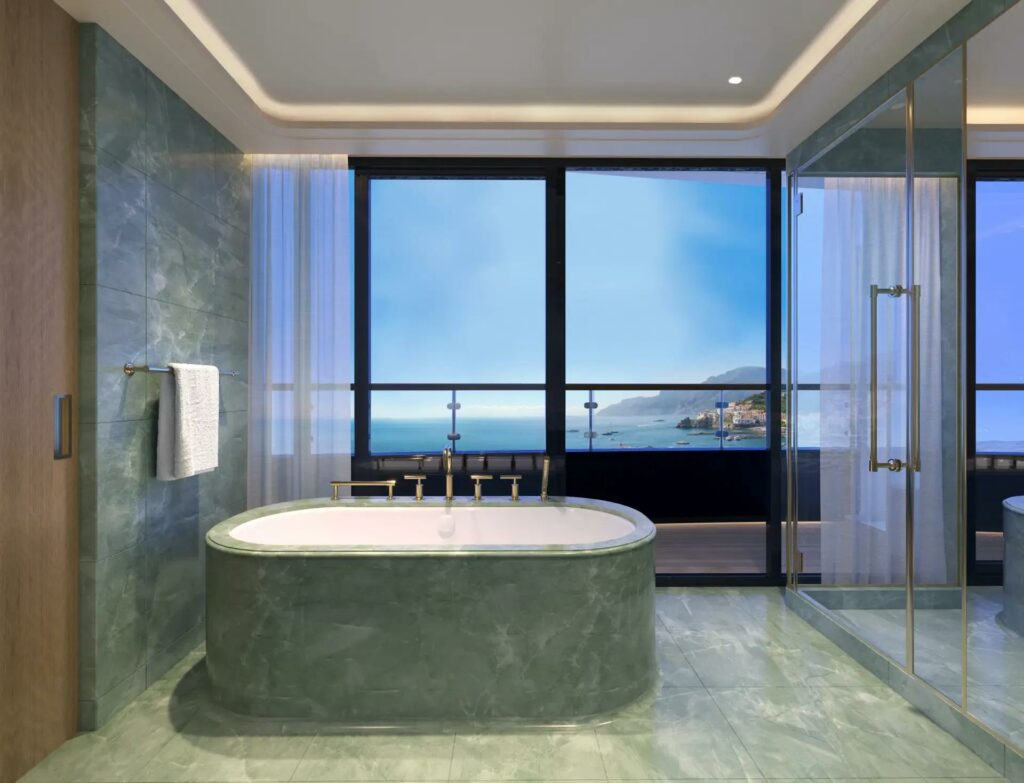
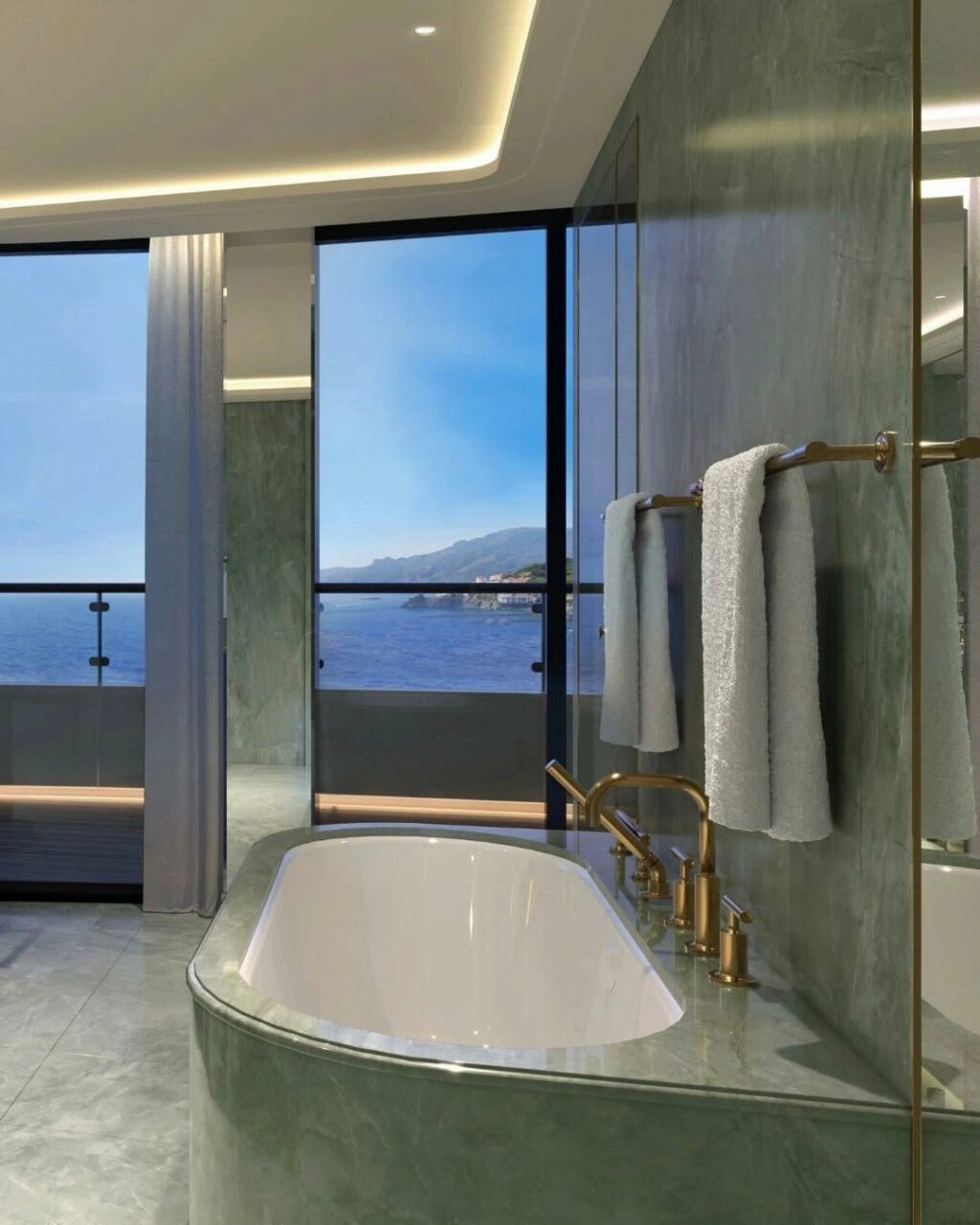
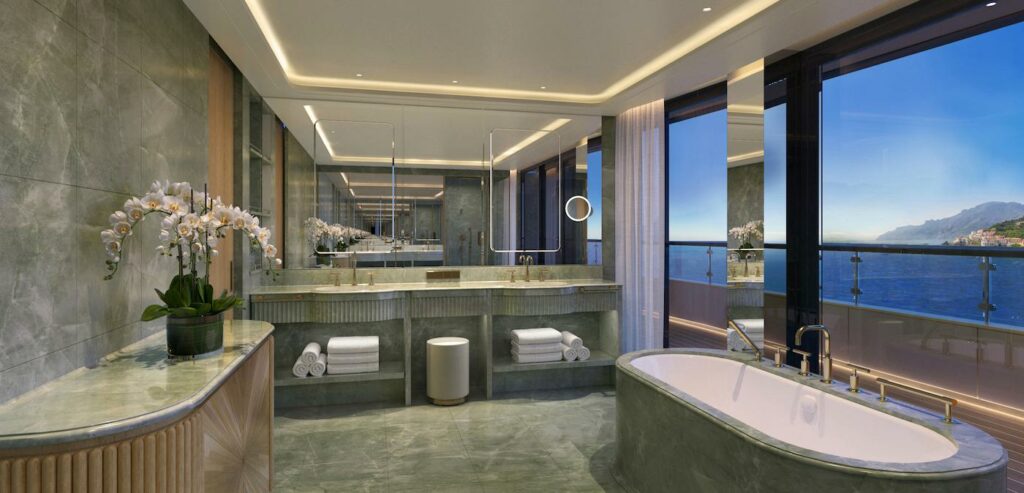
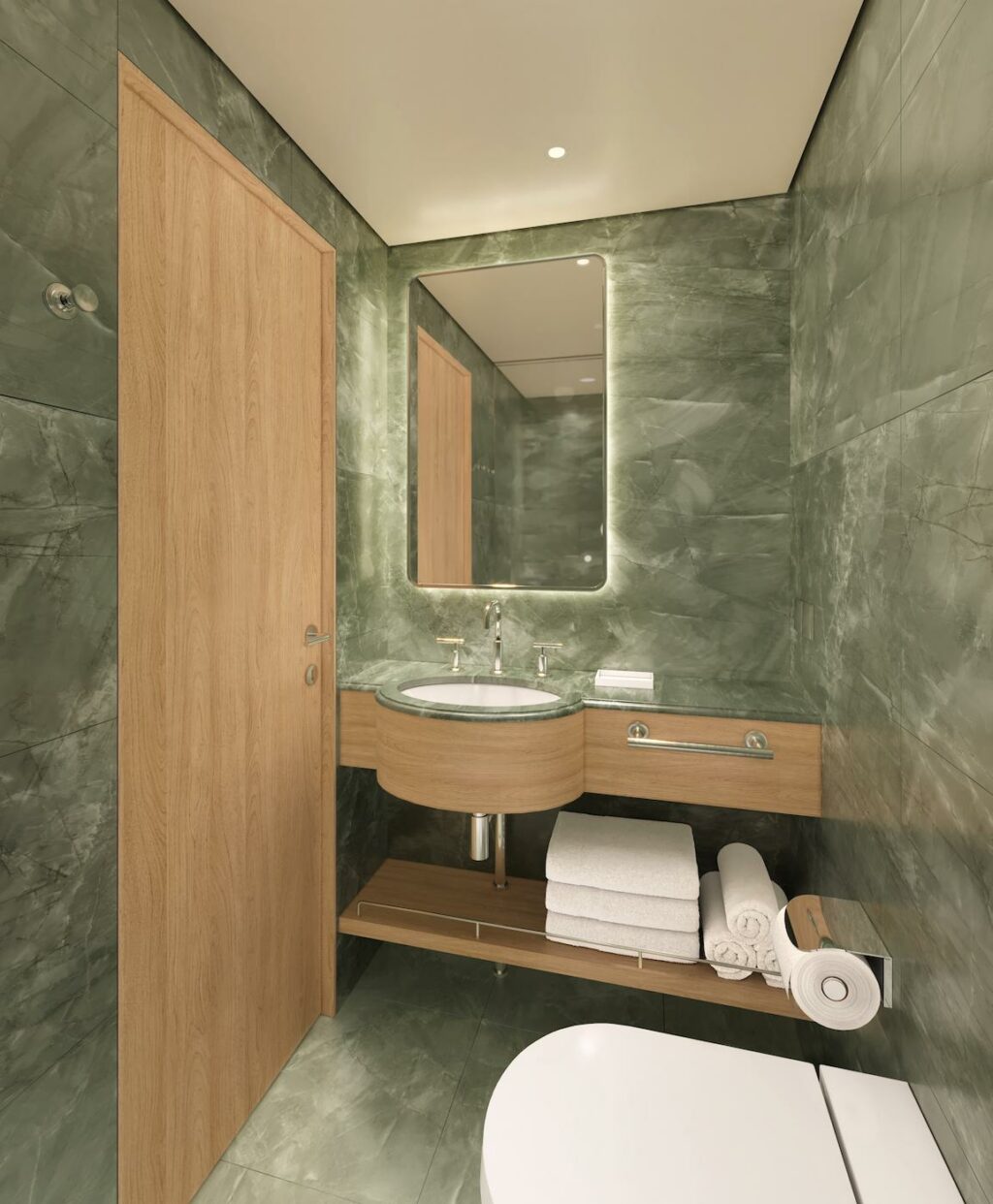
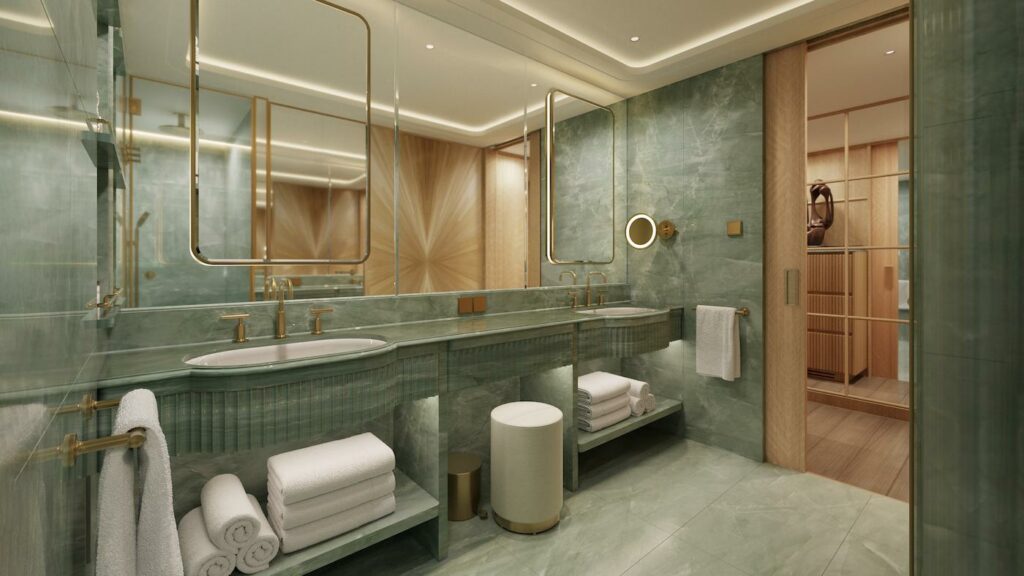
Cladding them in Emerald Green quartzite creates a sense of material continuity between the interior and the seascape outside. The colour of the stone echoes the water, while its density communicates permanence, substance and a distinctly tactile form of luxury.
Every bathroom component was designed and manufactured individually, with a level of attention that goes beyond aesthetics to daily use, durability, installation, and overall spatial coherence.
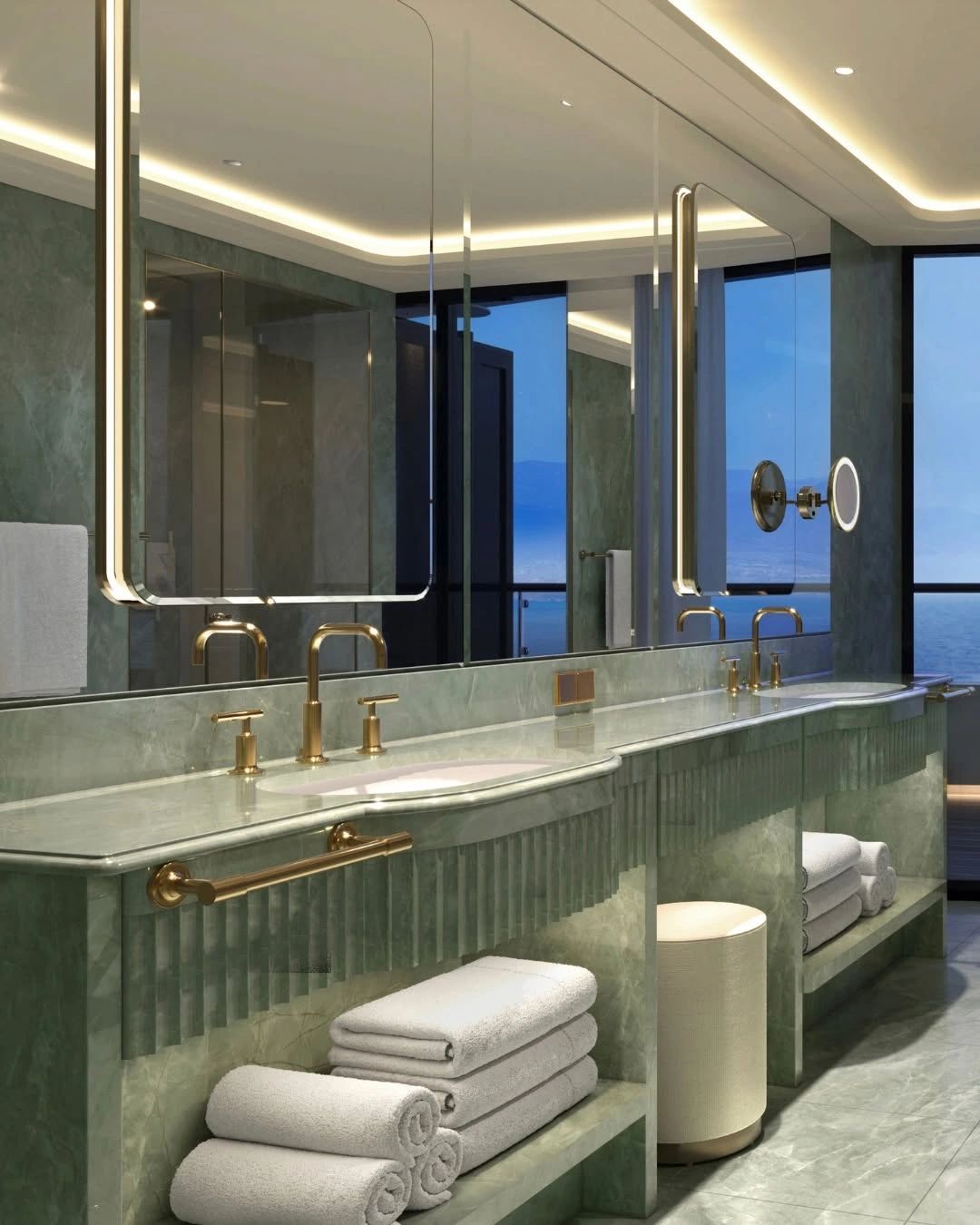
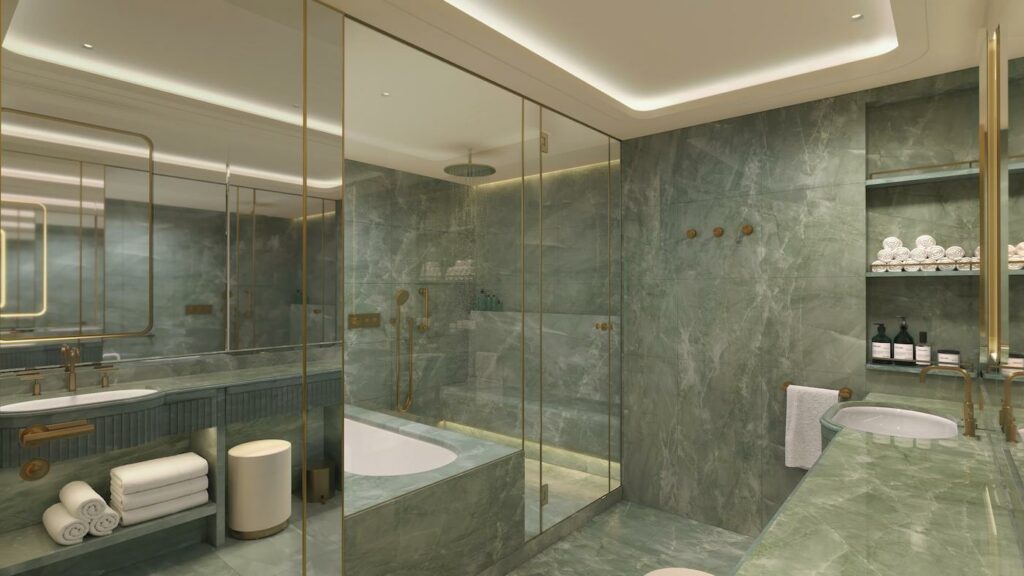
The heated quartzite shower bench, for example, is not simply a horizontal surface. It is a solid architectural element with a specific thickness, edge treatment and profile, all of which must align perfectly with the other components of the shower enclosure.
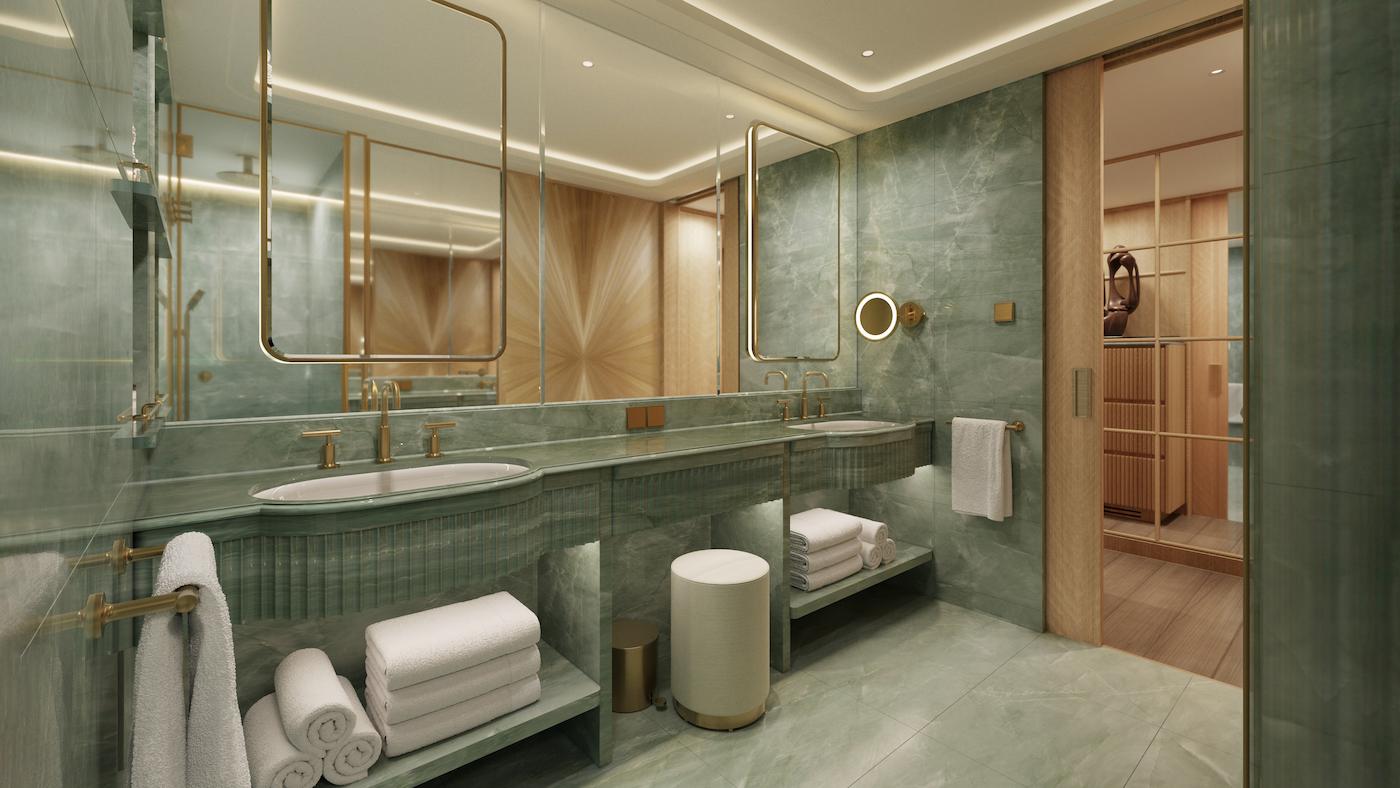
The shower threshold must provide watertightness while maintaining visual continuity within minimal tolerances. The vanity top has to match the project's drilling templates exactly and present a flawless finish.
Extending this level of attention across 95 suites, each with its own arrangement, gives a clearer sense of what it means to run a project of this scale in the natural stone sector.
As we wrote in our article From Suppliers to Partners, it is precisely in contexts like this — where variables multiply and tolerances tighten — that a partner makes the difference a mere supplier can't.
Emerald Green Quartzite: A Complexity Worth Discovering
When the project reached Marmi Vrech, the brief was clear in its numbers and demanding in its details: 1,060 square metres of Emerald Green quartzite for the suite bathrooms of Four Seasons I.
The specification covered a broad range of accommodation categories, from 41 Deluxe Suites to Ocean Suites, Superior Suites and Grand Suites, each with its own layout and composition.
Emerald Green, in the Lake Placid variant, is not a bright or decorative green. On board, it reads closer to a sea-water green, crossed by pale, milky veining that shifts dramatically with the light.
In the finished bathrooms, the stone seems to absorb the outside landscape — the sea, the glazed surfaces, the natural light pouring in from the terraces.
It is a hard, dense, compact material, highly resistant to water and staining. These qualities make it especially suitable for a yacht bathroom. Yet the same hardness that makes it right for the marine environment is also what makes it difficult to work.
Emerald Green quartzite does not yield easily. Blades wear down faster, cuts demand carefully calibrated speed and pressure, and certain geometries — thin edges, sharp corners, curved profiles — push the stone to the limit of its own cohesion.
When a slab fails during production, you can’t just select another one. You have to start over: selection, cutting, finishing, all while holding the colour and veining consistency the project demands.
One of the first major challenges concerned the curved bathtub surrounds, carved from solid quartzite blocks 300 millimetres thick. Thirty centimetres of solid material to hollow out, shape, and bring to form without losing structural stability. Once installed, all that difficulty disappears into a continuous curve around the bathtub: soft, controlled and apparently effortless.
A second challenge involved the combination of different thicknesses within a single element, particularly in the vanity tops. With a material such as Emerald Green quartzite, joining distinct components means managing variations in colour, intensity and vein direction. At this level of design, even the smallest discontinuity can become immediately visible.
The third challenge — perhaps the most telling — involved the fluted fascias beneath the vanity tops.
These elements introduce one of the few changes of rhythm in the stonework. The surface shifts from smooth to articulated, gaining depth, shadow and vertical emphasis. Parallel grooves milled into the quartzite enrich the front of the vanity without turning it into a showy feature.
Producing these on a hard, veined, and not always compact quartzite was one of the most delicate operations in the whole project.
No piece came off the machine fully finished. Each returned to the hands of an experienced operator, who finished by hand what the machine had started: checking a vein, refining an edge, correcting a groove, salvaging a damaged element or remaking it entirely.
These are small decisions, repeated many times over, that take time, care, and the discipline not to stop until the piece matches the project's standard.
As Project Manager Flavio Costan Zovi explains:
“The fluted elements beneath the vanity tops are remarkably complex to produce. To an untrained eye, their value may not be immediately apparent. Yet from cutting through to final finishing, they're probably the most technically demanding elements on board, and the most rewarding to look at closely.”
On Board, Everything Gets Harder
The challenges did not end in the workshop.
Every breakage, every extra finishing pass, every adjustment to machining parameters had knock-on effects on the next stage: installation on board.
At that point, the project moved into an entirely different operational context.
In the workshop, tools are readily available, spaces are organised and teams work within a controlled production sequence. On a yacht under construction, conditions are different: spaces are tighter, multiple teams are working at the same time, activities must be coordinated with other contractors, tools must be brought on board and timelines bend to the yard's overall rhythm.
Four Seasons I was still taking shape in Ancona as the stone components arrived and were installed. The suite bathrooms, conceived as bespoke residential spaces with complex geometries, required close coordination between the production facility in Cervignano and the installation team on board.
In shipbuilding, this is simply part of the job. But when a material demands additional finishing, repair work or inspection, the transition from workshop to vessel becomes considerably more sensitive. It's not just about carrying a finished piece to the installation site. It's about holding the same level of control in an environment that is, by nature, harder to control.
The Second Vessel Is Born From This Experience
Four Seasons I turned a designed project into a built reality. It showed us how to handle this specific material: which parameters to adopt during the most critical production stages, how to organise slab selection to ensure chromatic consistency across batches of this scale, and how to structure the workflow between the workshop and onboard installation to cut down on rework.
When some tools, particularly those used during finishing, proved unsuitable for the hardness of Emerald Green quartzite, we sourced better ones, tested them, and selected accordingly. When existing milling parameters could not reliably produce the most complex geometries, we redefined them. And where the project called for it, we went further: tools designed and built to order, engineered specifically for this material and these operations. Where the design itself could be improved, our technical office proposed targeted changes to the client — changes born directly out of experience on site.
Choosing a tool, sequencing an operation, deciding how a groove gets finished — these aren't isolated decisions. Multiplied across dozens or hundreds of pieces, they shape timelines, quality, the amount of rework required, and the margin of control you arrive on board with.
The collaboration did not end with the delivery of the first vessel. On Four Seasons II, we were called back.
The second unit — same family, same design philosophy — can now incorporate the improvements generated by the first ship: better-suited tools, more precise procedures and technical know-how earned through direct experience.
Remakes that required time and resources on Four Seasons I become preventive procedures on Four Seasons II. Issues that emerged mid-project become checkpoints built into the production process.
This is the real value of working in series on a complex project: you're not simply repeating the same job — you're applying a refined skill set.
A project of this kind should not be described only as a completed success. It is also an account of how one vessel can improve the next — how complexity can become process, and how practical experience can sharpen both tools and decisions.
What Guests Will Never See
For guests on board Four Seasons I, all of this will probably stay invisible.
They will see a green quartzite bathroom, a watery, mineral surface extending from floor to wall, a well-proportioned vanity top, a heated shower bench, a curved bathtub surround and a fluted fascia catching light and shadow beneath the basin.
They will not see the slab that broke halfway through production and had to be remade from the beginning. They will not see the finishing tests repeated until the correct surface was achieved. They will not see the technical meeting in which the cutting parameters were changed to reduce breakage during the most critical stages. They will not see the hours of coordination between the workshop in Cervignano and the shipyard in Ancona, syncing deliveries and installations inside a yard running at full capacity.
And that is precisely as it should be. Guests experiencing a space this refined should not have to read the process. They should simply enjoy the result.
Four Seasons I is already sailing. Its suites are occupied and its bathrooms are in use.
we're already at work on the next one. Not starting over — but carrying forward everything the first one left behind: experience, precision and a more advanced method.