When Local Sourcing Becomes Luxury
For a long time, in traditional luxury, value seemed to grow with distance: the farther away, the rarer it felt, the more precious it became. Exoticism—far-flung provenance, names that hinted at ocean passages, materials brought in from thousands of kilometres away—was woven into the allure.
Today, though, globalisation has made the exotic accessible—and easy to replicate. And once the object of desire becomes easy to obtain, it’s no longer exclusive.
The paradox is that, just as we keep looking for an “elsewhere”, the rarest thing to secure (and to defend) is what’s closest: the authenticity of place—an origin that is precise, verifiable, and readable in the material itself.
In other words, authenticity becomes the opposite of global uniformity. And a bond with a place stops feeling like folklore and turns into a credible, real value story.
This is where exclusivity is measured today. And in marble—iconic by nature—local provenance can become the most refined expression of that pursuit.
The Competitive Edge of Locally Sourced Marble
For Marmi Vrech, a Friuli-based company, bringing the region’s marbles into high-end projects isn’t about sentimental “local pride” (and certainly not about using sustainability as a fig leaf). It’s a strategic choice: when proximity is handled properly, it creates real advantages—better oversight of the supply chain, shorter timelines, higher perceived quality, and a project story that feels genuinely credible.
A lighter footprint: why kilometres matter
When it comes to emissions, it’s not only how materials travel that matters, but—above all—how far. An extra-European supply chain can add thousands of kilometres and weeks of transit, crossing continents and leaving a heavy carbon trail. A regional supply chain shortens routes and reduces handovers, making logistics lighter—and, crucially, far easier to control.
And this isn’t only an environmental comparison. It’s economic, logistical, and qualitative too. In today’s ethical luxury—where high-end clients increasingly want verifiable choices—shorter distances can make a real difference, not so much in the final leg to site (which depends on the destination), but in the early stages of the chain—quarrying, storage, fabrication—where proximity can drastically cut transport-related emissions without sacrificing quality or prestige.
The Economic and Logistical Upside: Fewer Bottlenecks, More Agility
In high-end projects—yachts, hospitality, luxury residences—challenges are part of the brief. Working with nearby supply chains means fewer customs hurdles, fewer transit handovers, shorter waits, and, above all, faster response when you need samples, replacements, or last-minute adjustments.
In luxury, time is a currency: a smoother, more agile process can be worth as much as a rarer material.
Aesthetic and Authenticity Advantages: Genius Loci as Irrepeatable Uniqueness
Luxury has never been fond of uniformity. More and more, it calls for surfaces with character: veining you can’t copy, controlled variation, a perceptible difference from one piece to the next. Here, Friulian marble has a natural advantage, because every slab carries recognisable traces of where it comes from. It’s the genius loci — the identity of the territory — turned into a design material.
You’re not choosing “a grey-and-pink marble”, but Fior di Pesco Carnico, quarried from a one-of-a-kind open-air site; not “an elegant grey”, but a material with a precise, verifiable territorial identity.
It’s a kind of luxury that doesn’t insist on being recognised by everyone. Quite the opposite: it asks to be told, because contemporary prestige is built by what can be traced and proven — not by ostentation.
The Protagonist: Fior di Pesco Carnico
If there’s one material that shows how “nearby” can become luxury, it’s Fior di Pesco Carnico.
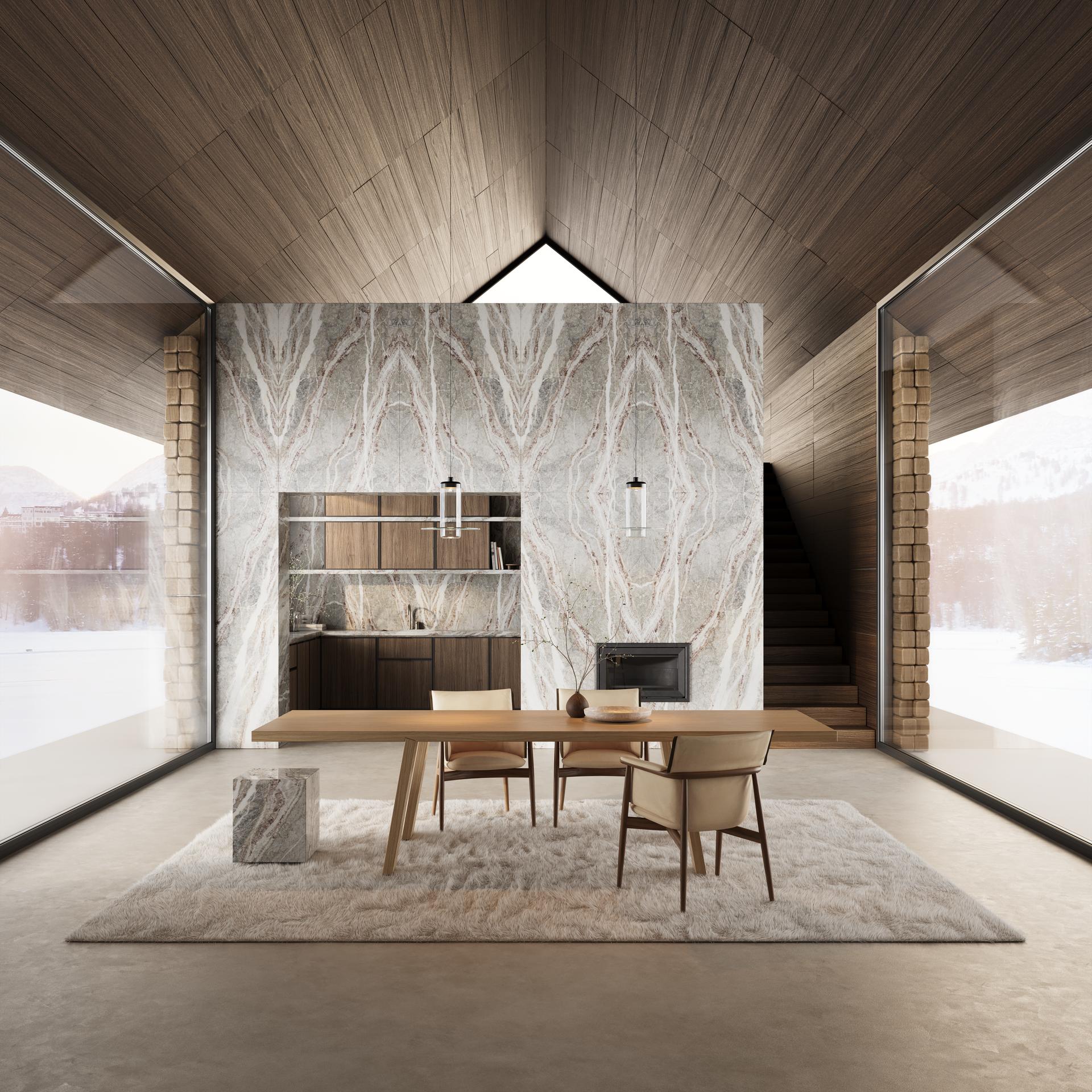
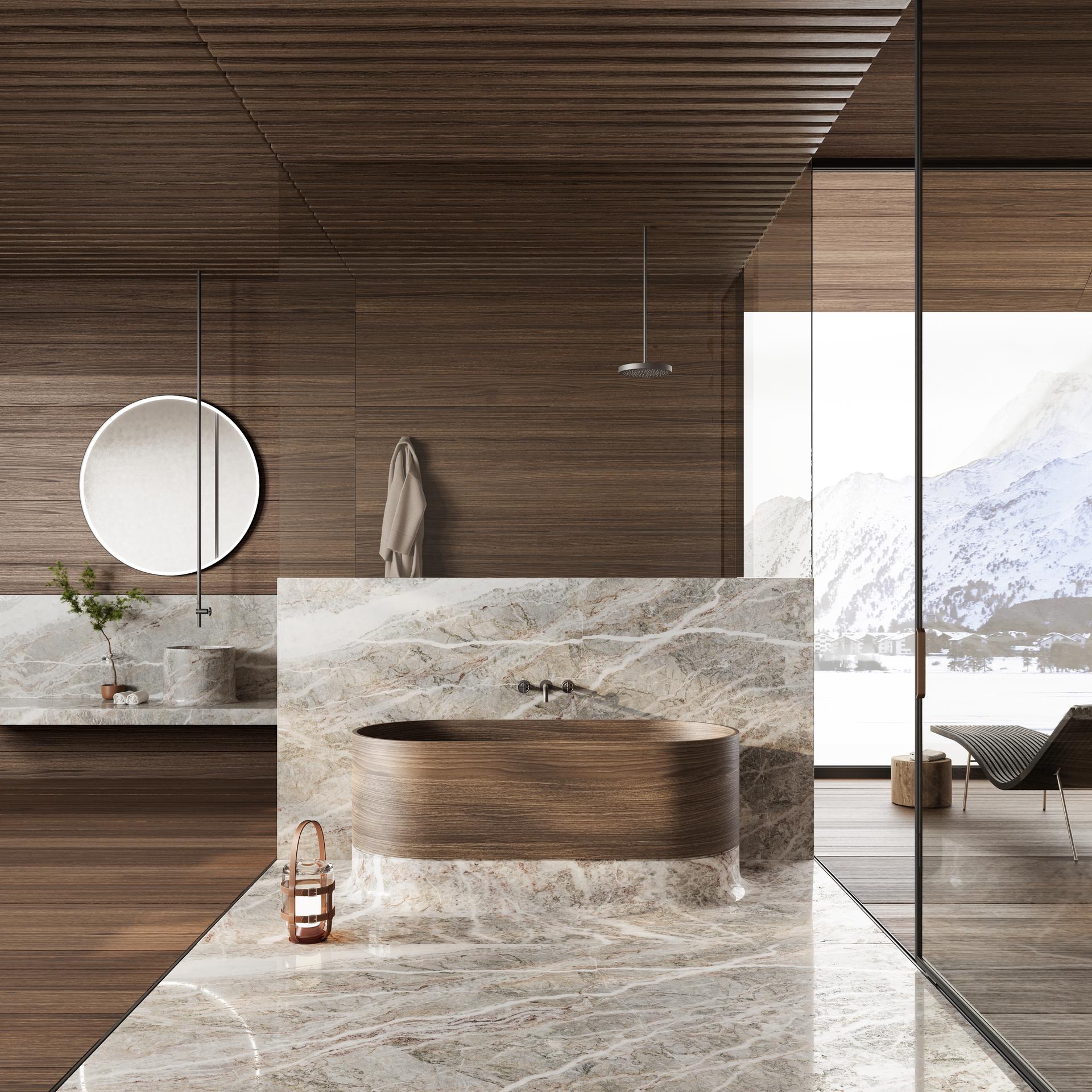
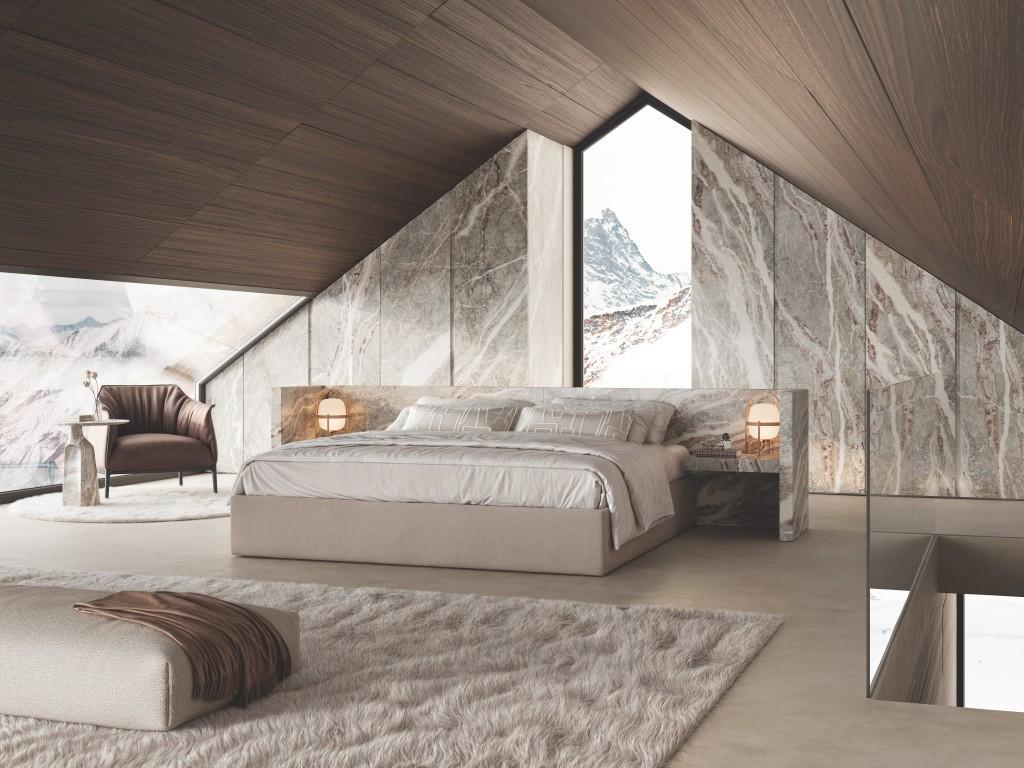
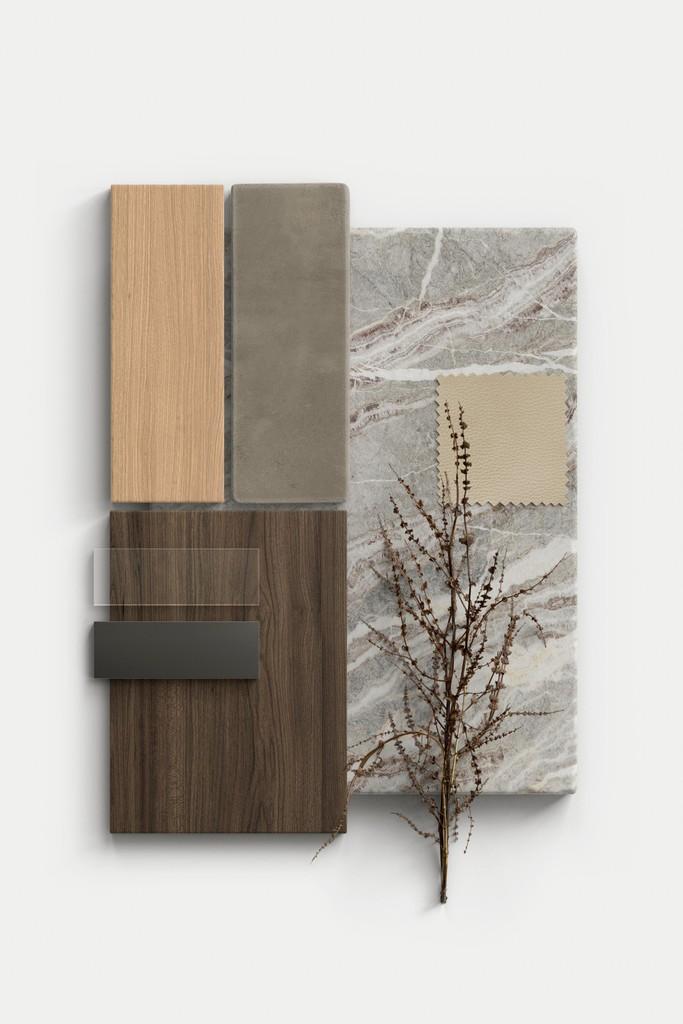
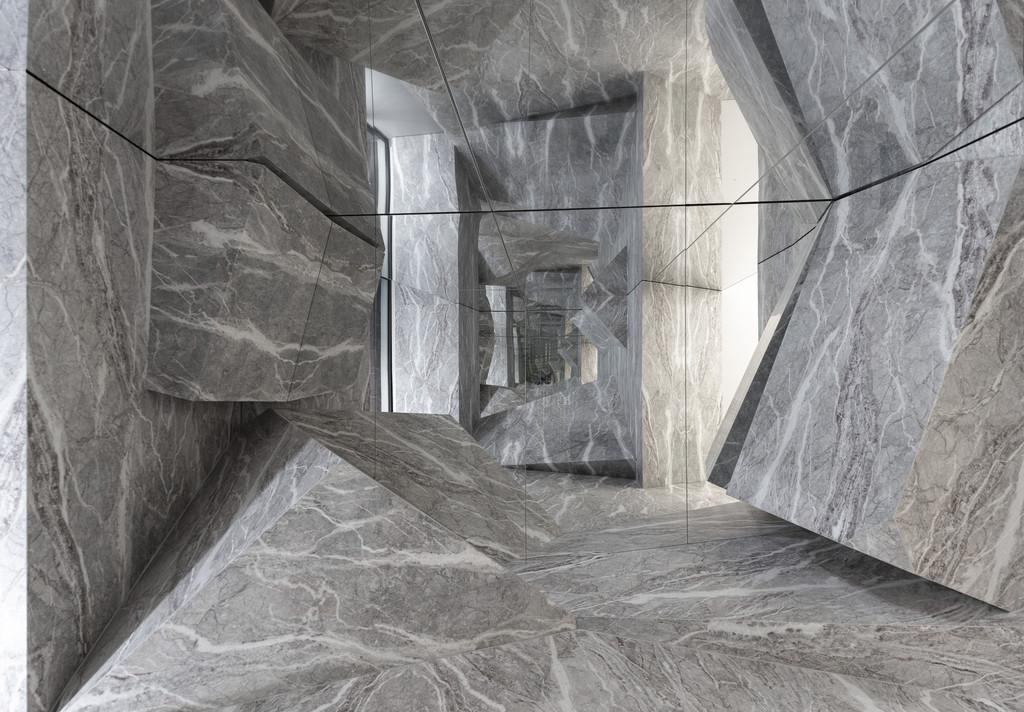
It’s one of the most recognisable marbles: a pale base that shifts between white and grey, crossed by rosy accents that look like petals dancing, suspended in the stone. It’s exactly this chromatic delicacy — vivid enough to feel distinctive, balanced enough to work seamlessly in a project — that wins over designers looking for elegance without display.
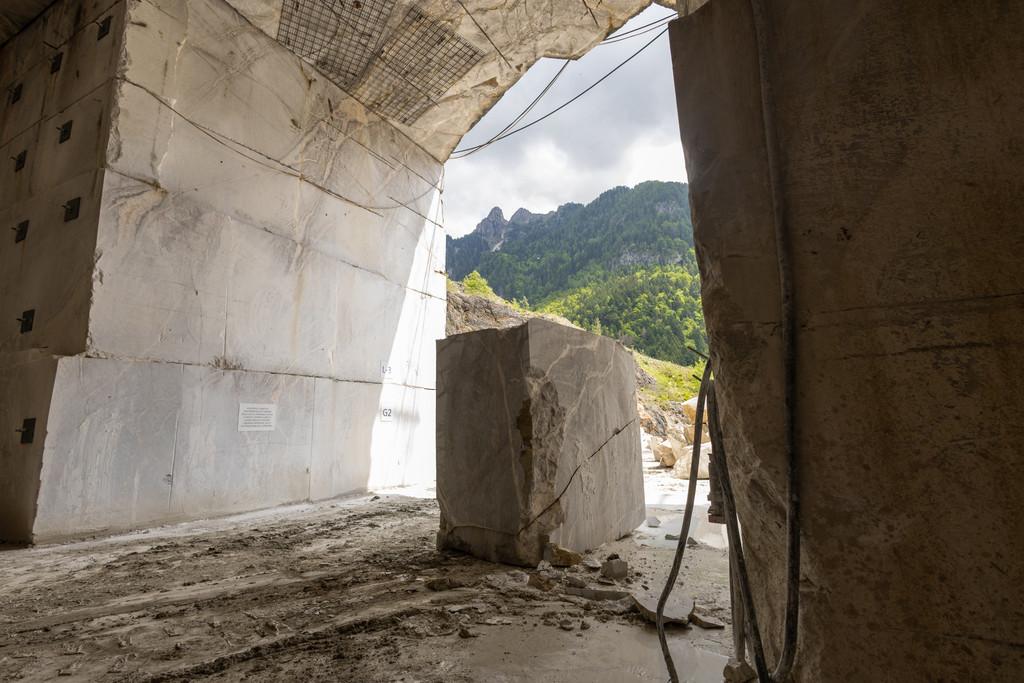
It comes from one—and only one—place on the planet: the Carnic Alps, north of Forni Avoltri, close to the Austrian border. A single open-air quarry, exclusively owned by Margraf since 1927. That uniqueness is far from a detail: it’s what ensures every slab carries an unrepeatable geological story—four hundred million years of marine layering and Alpine metamorphism, condensed into veining you won’t find anywhere else.
Output is limited, quality selection is rigorous, and access to the finest material is tightly controlled. That makes Fior di Pesco less common than its well-known name would lead you to believe. Marmi Vrech can work with it because it is now part of the same group as Margraf, sharing privileged access and deep expertise in selection.
Marmi Vrech chose it for the floor of its stand at the Monaco Yacht Show 2025, integrating it with wood inlays in a contemporary pattern—an immediate way to show that a local material can add value even in the most international settings.
And it isn’t the first time Marmi Vrech has selected it for high-end projects: Fior di Pesco has travelled on international yachts and found its way into luxury residences and boutique hotels. Each time with the same promise: to carry a powerful territorial identity into interiors where luxury is expected to be authentic.
«When a designer chooses local materials, they’re not only cutting emissions. It’s a cultural choice. It’s a way of saying that value is also measured in a provenance you can verify, in the story the material carries, and in a kind of rarity born from a specific place.»
Alessandro Vrech, CEO of Marmi Vrech
When Local Roots Speak a Global Language
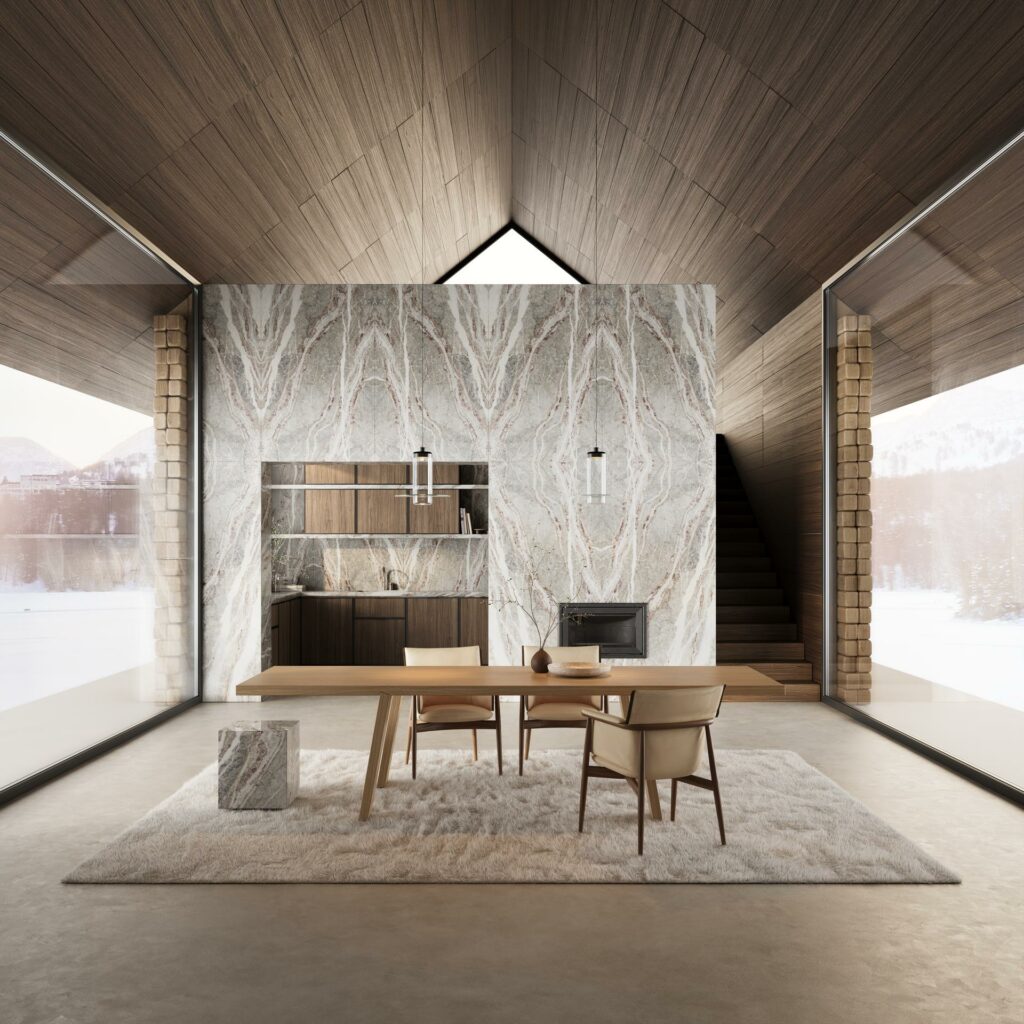
It’s becoming increasingly clear—even in high-end projects—that beauty alone, or the mere idea of provenance, is no longer enough to create prestige. Today, what counts is a material with a clear, tellable origin, a sustainable supply chain that can be monitored and controlled, and a rarity that feels credible. In this sense, Fior di Pesco Carnico aligns perfectly with today’s expectations: it’s instantly recognisable, it comes from a precise place, and it carries a visible identity right on the surface.
Then you need someone who can turn that origin into a result. That is Marmi Vrech’s role: to act as a bridge between local and global. Rooted in Friuli Venezia Giulia, with selection and fabrication carried out in the region, and at the same time the capability to bring those materials to the world—translating genius loci into contemporary luxury interiors.
That’s how a small dot on the eastern edge of Italy’s map—Friuli, a hinge between worlds, a borderland—becomes an international value.