Inspiration
Capitolati fatti bene: le decisioni che non si possono rimandare
A backlit onyx wall is ultimately judged when the lights are switched on. Yet much of what we see at that moment has already been decided: in...
A backlit onyx wall is ultimately judged when the lights are switched on. Yet much of what we see at that moment has already been decided: in the selection and cutting of the slabs, and in the dialogue between the stone specialists and the lighting designers.
An onyx slab may be selected for its colour, the direction of its veining or the balance between lighter and darker areas. Then it is viewed with light shining through it, and its appearance changes. Layers take on greater depth; some veins become more pronounced while others fade into the background. Light passes through the stone unevenly, following its internal structure.
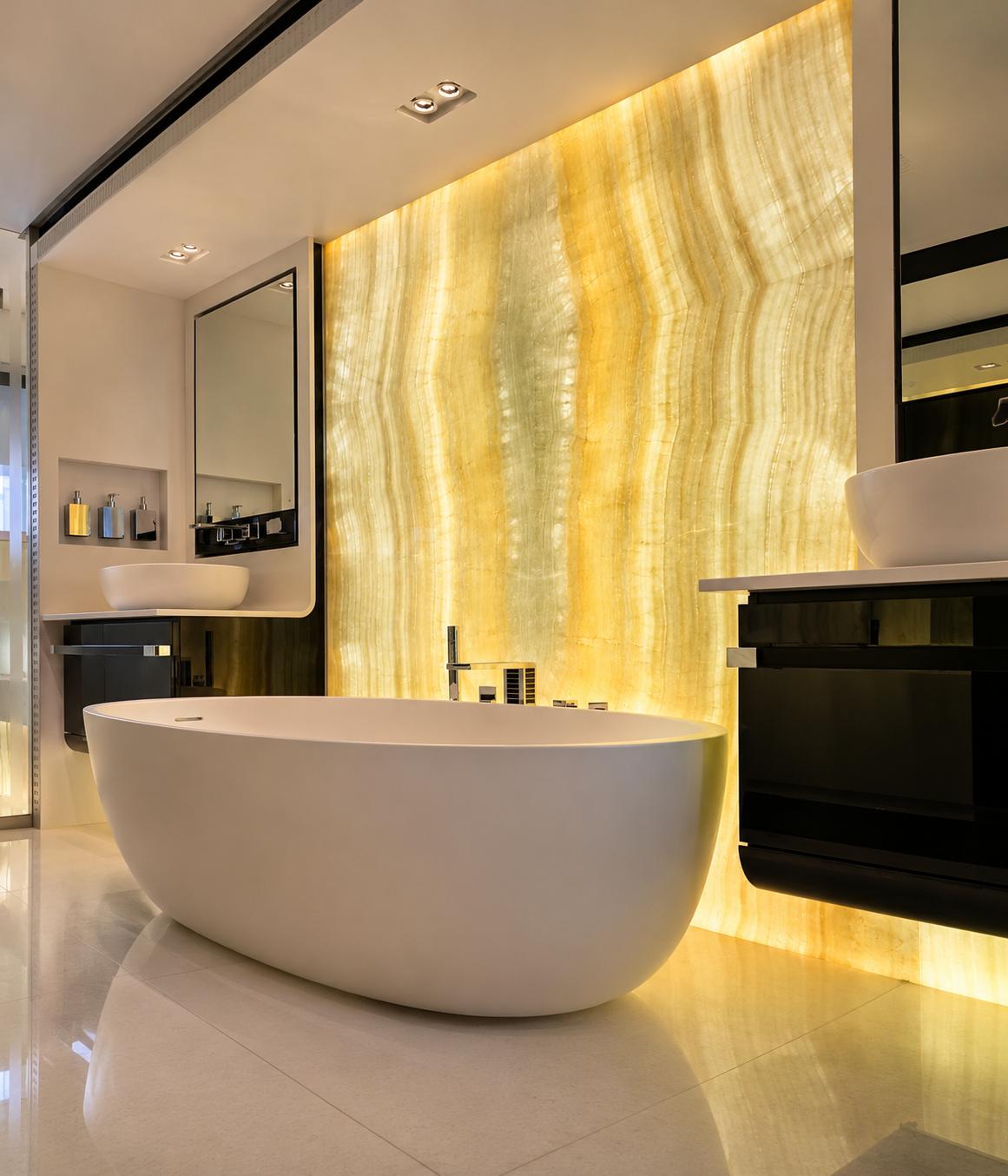
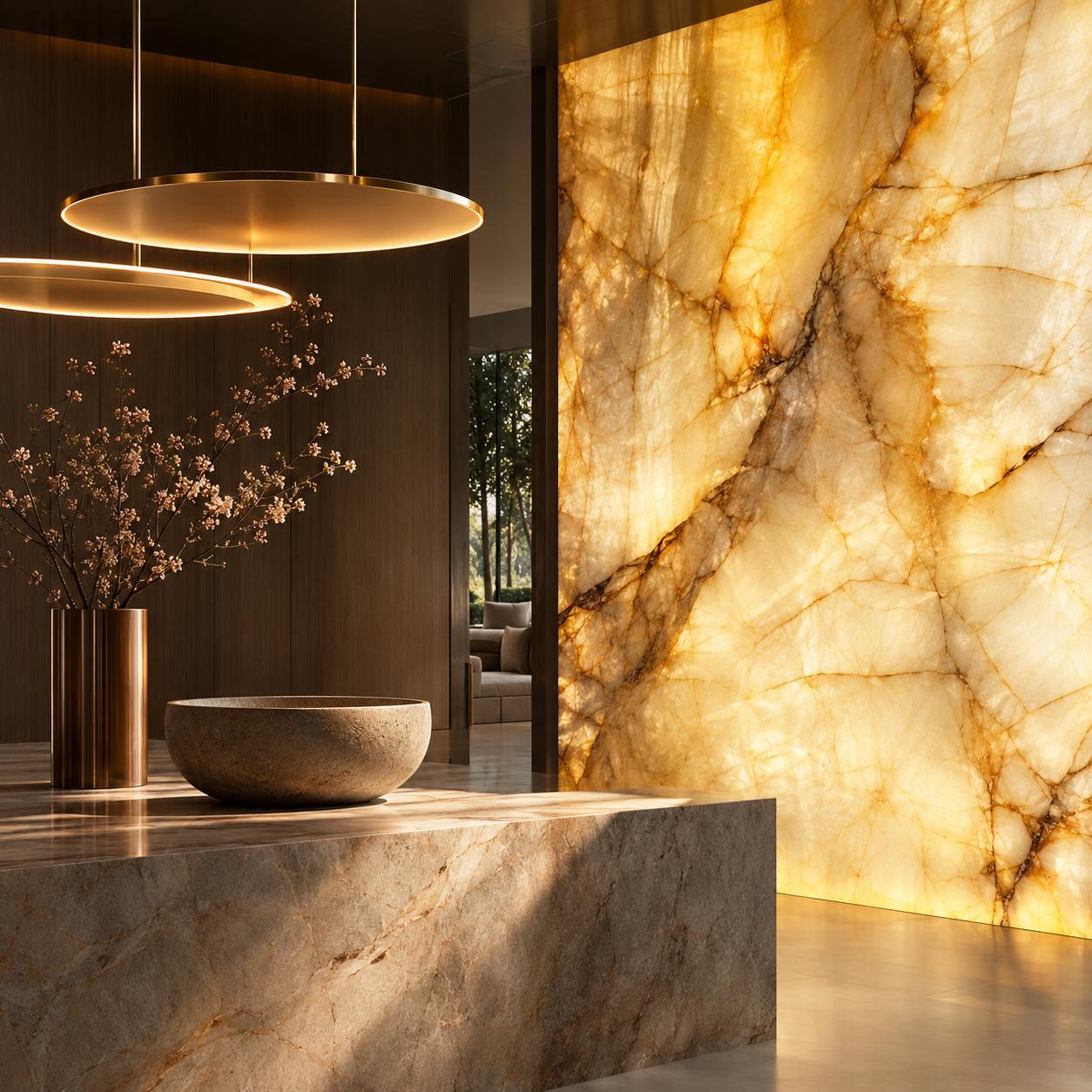
This is the principle behind backlighting, a technique that turns natural stone into a luminous architectural surface, as well as a wall covering or a piece of furniture.
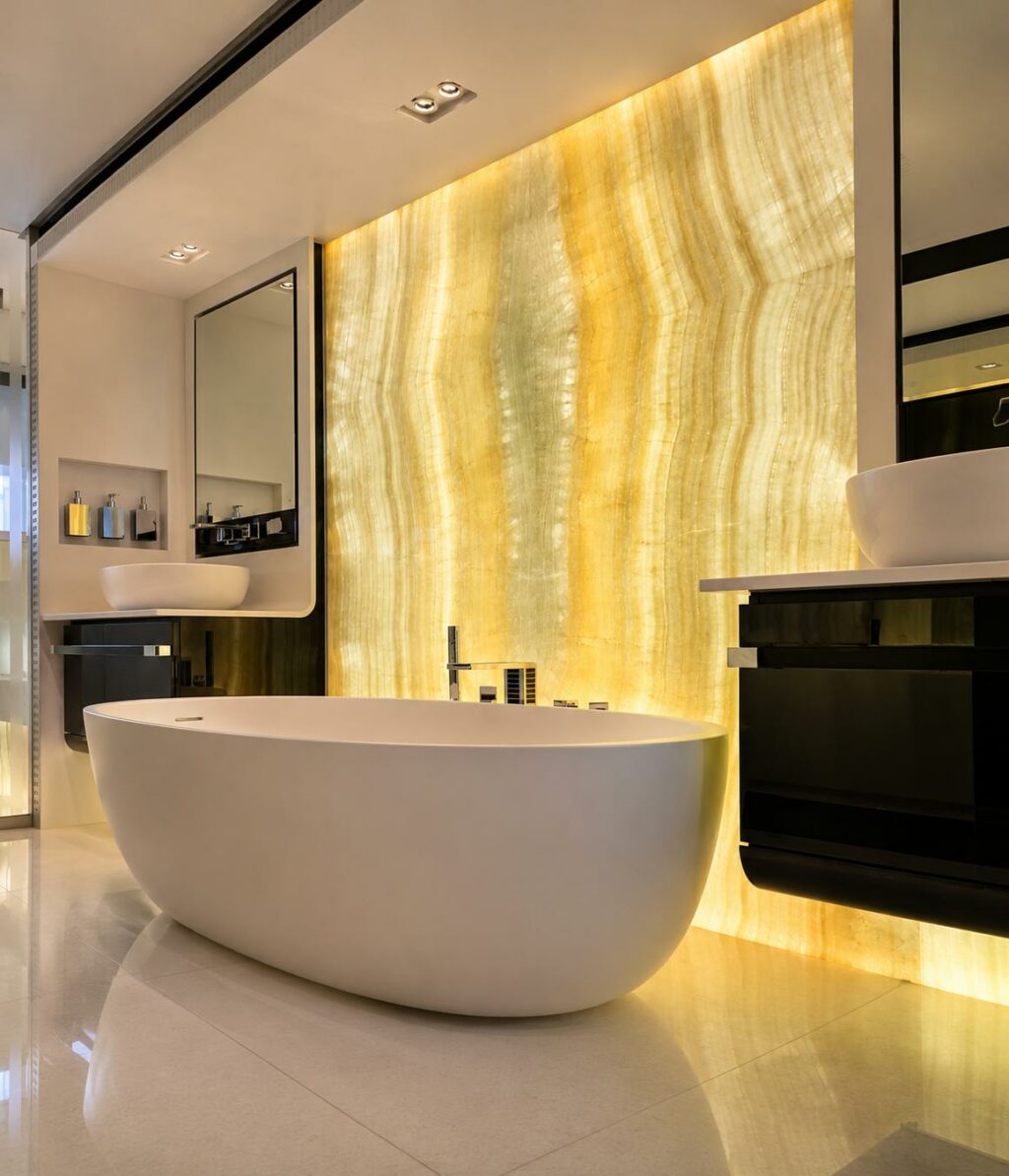
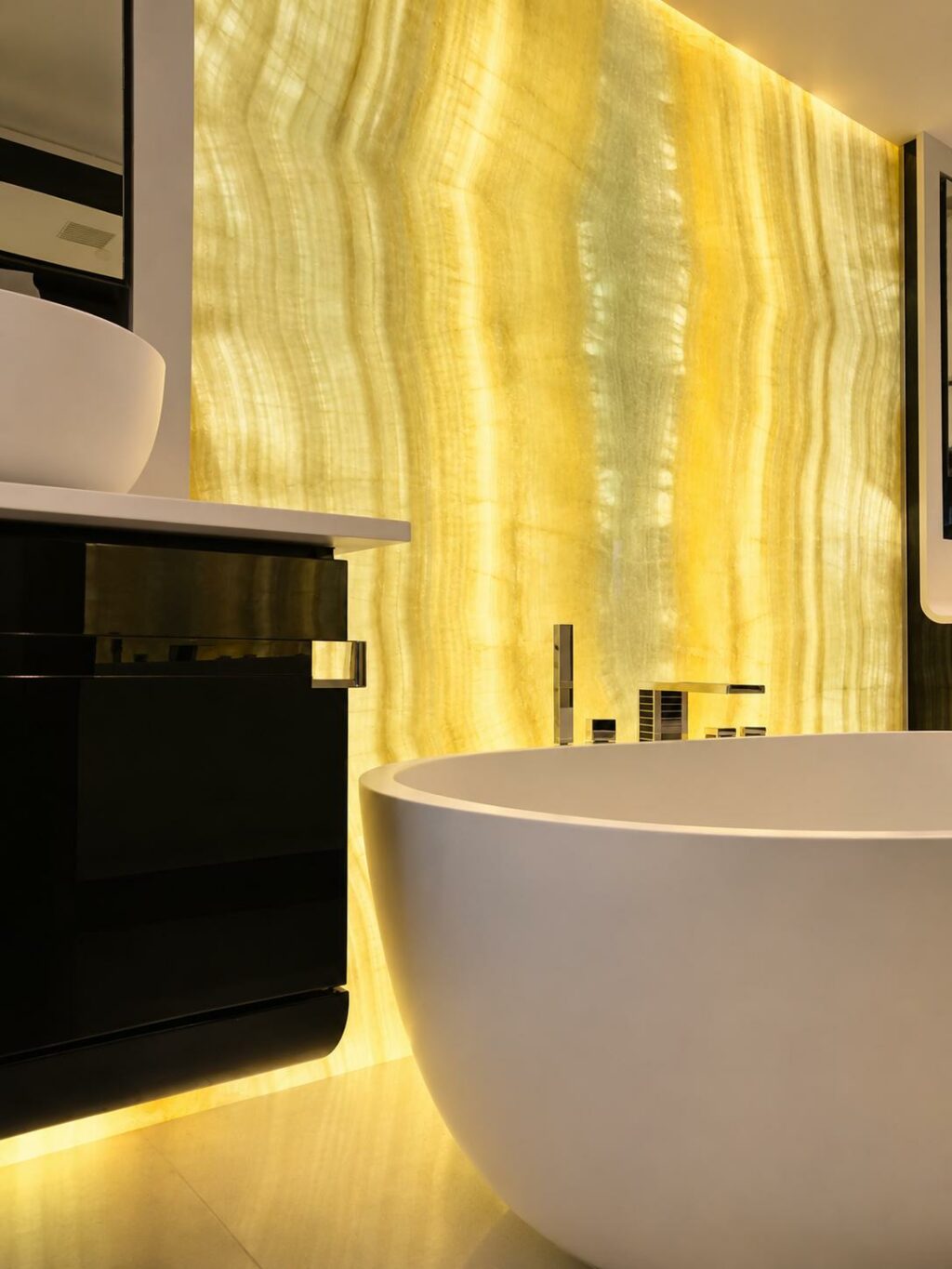
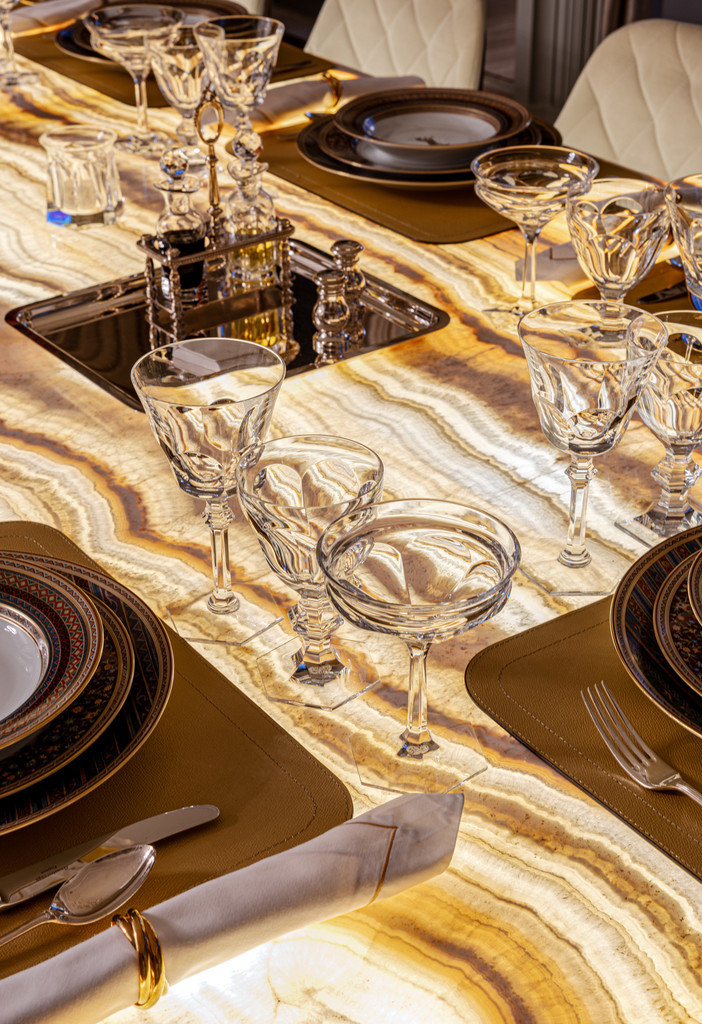
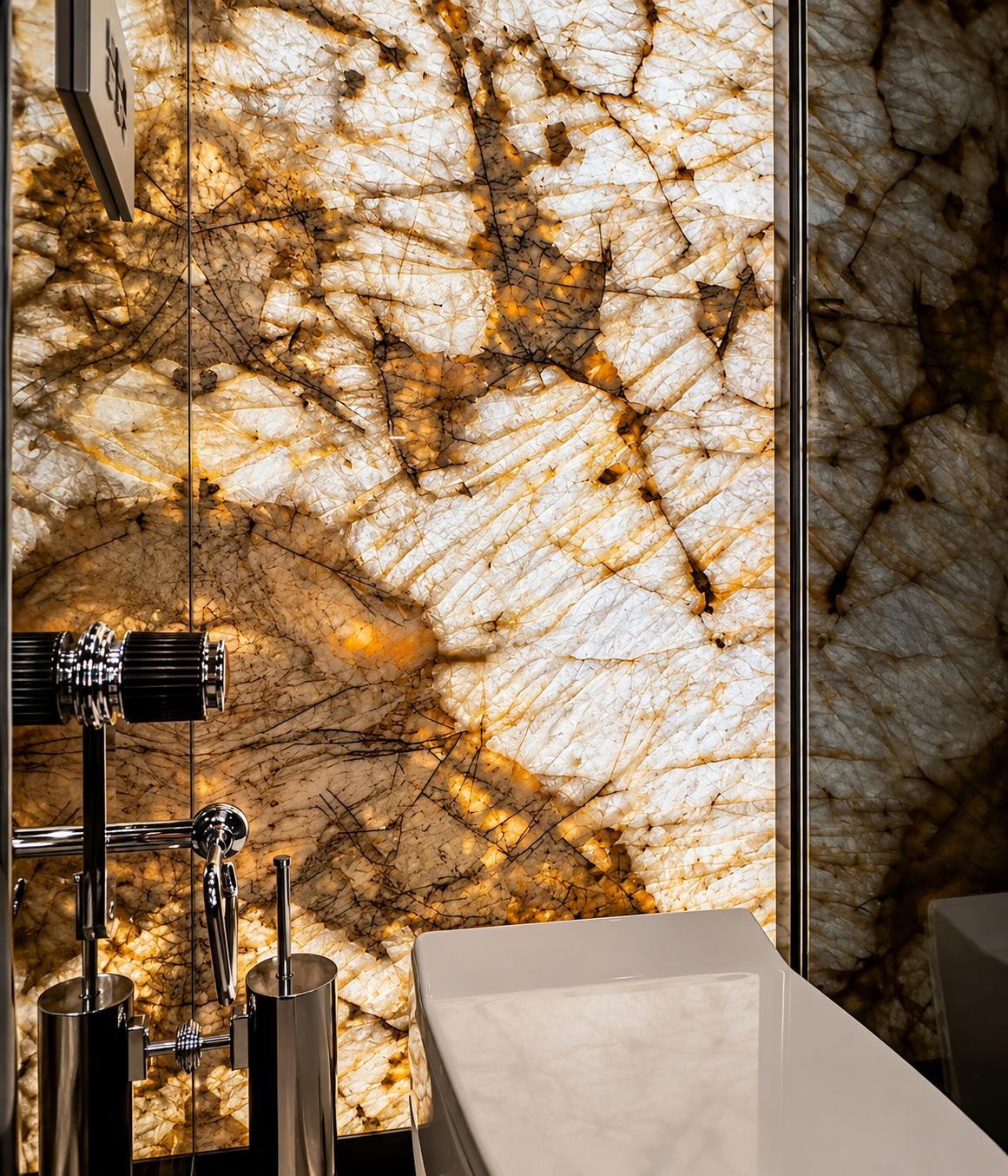
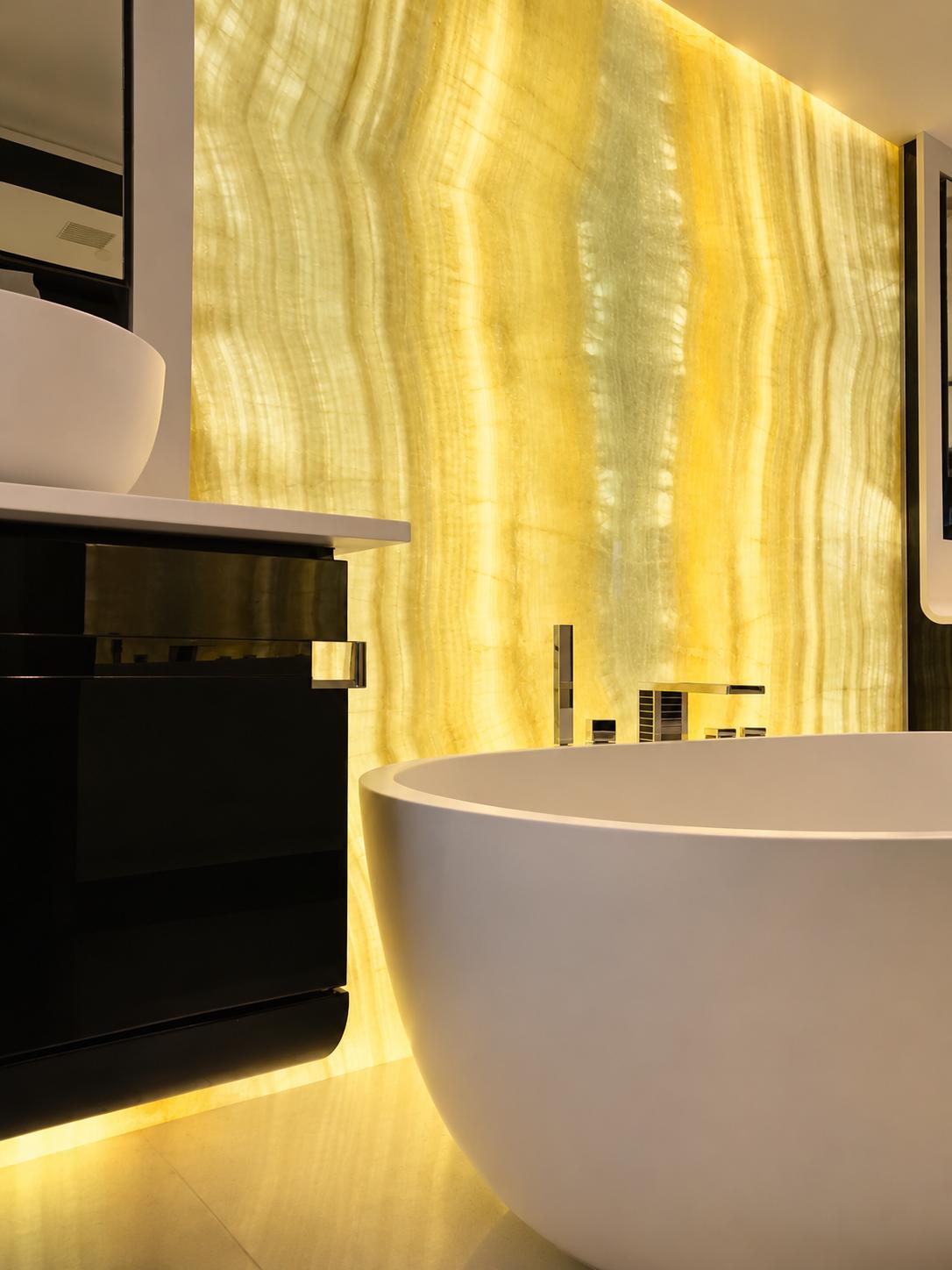
Above all, backlighting changes the role stone can play in a space. An onyx wall behind a bathtub can become a source of soft, diffused light, illuminating the room without prominent light fixtures. A tabletop lit from beneath can reveal veins and layers that are barely noticeable when the lighting is off.
Designing a backlit surface does, however, require particular care. Light does not reveal only the features we want to emphasise: it can bring a vein into sharp relief, expose more opaque areas or highlight differences between slabs that appeared to match perfectly.
Selecting an attractive stone is therefore not enough. As far as possible, the designer needs to anticipate how it will behave when light passes through it. For Marmi Vrech, the process begins with selecting the slabs, even before the lighting system is defined.
Translucency varies from one stone to another. The amount of light that passes through, the way it spreads and the balance between illuminated and opaque areas all depend on the material.
Onyx is one of the most widely used stones for backlit applications. Its natural layers, often arranged in overlapping bands of colour, create a sense of depth that is difficult to achieve with conventional lighting.
Alabaster, by contrast, often has a fine grain and a relatively even structure, which can help diffuse light softly. It is therefore well suited to surfaces designed to provide a gentle glow without allowing the stone's pattern to dominate the space.
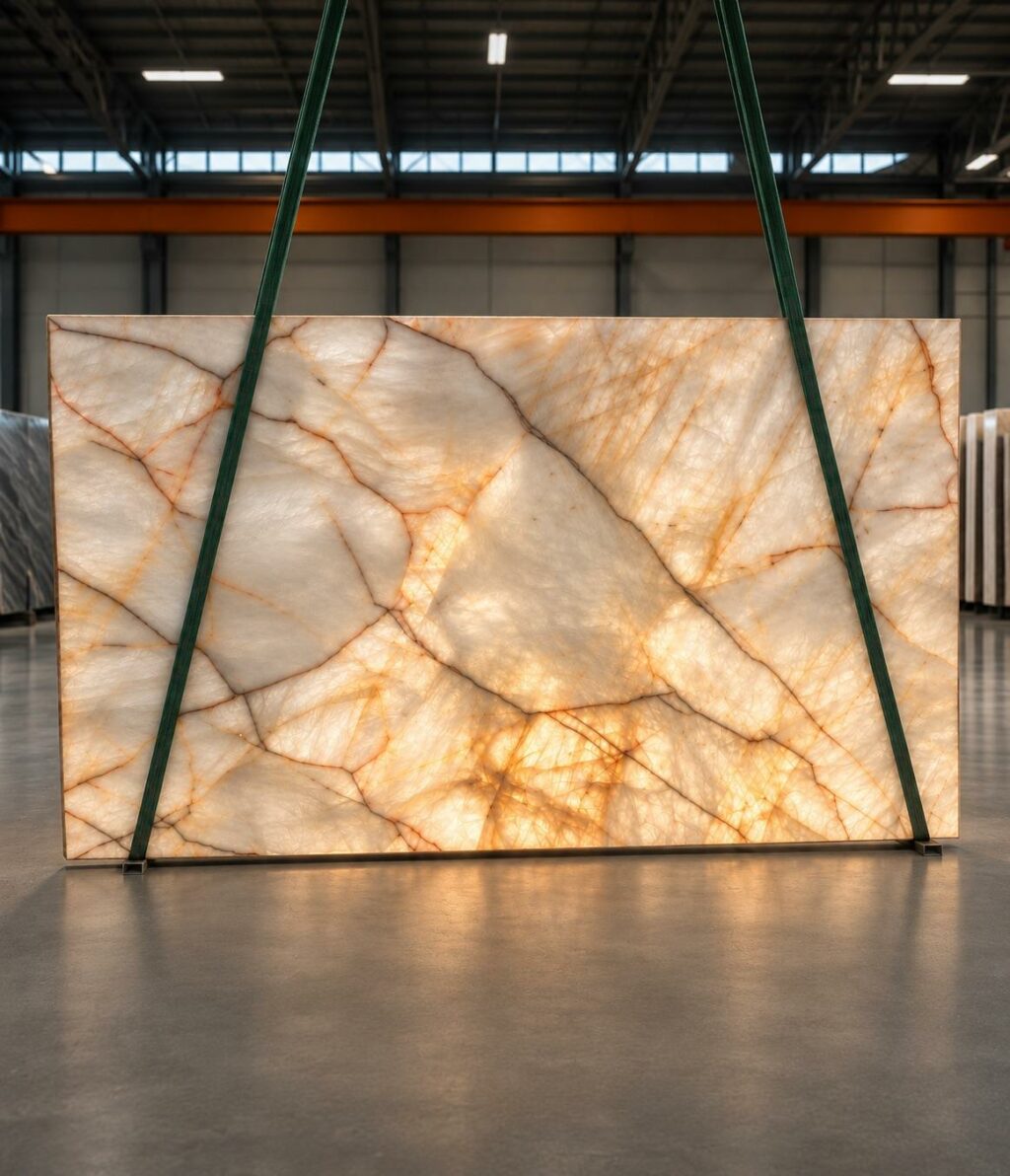
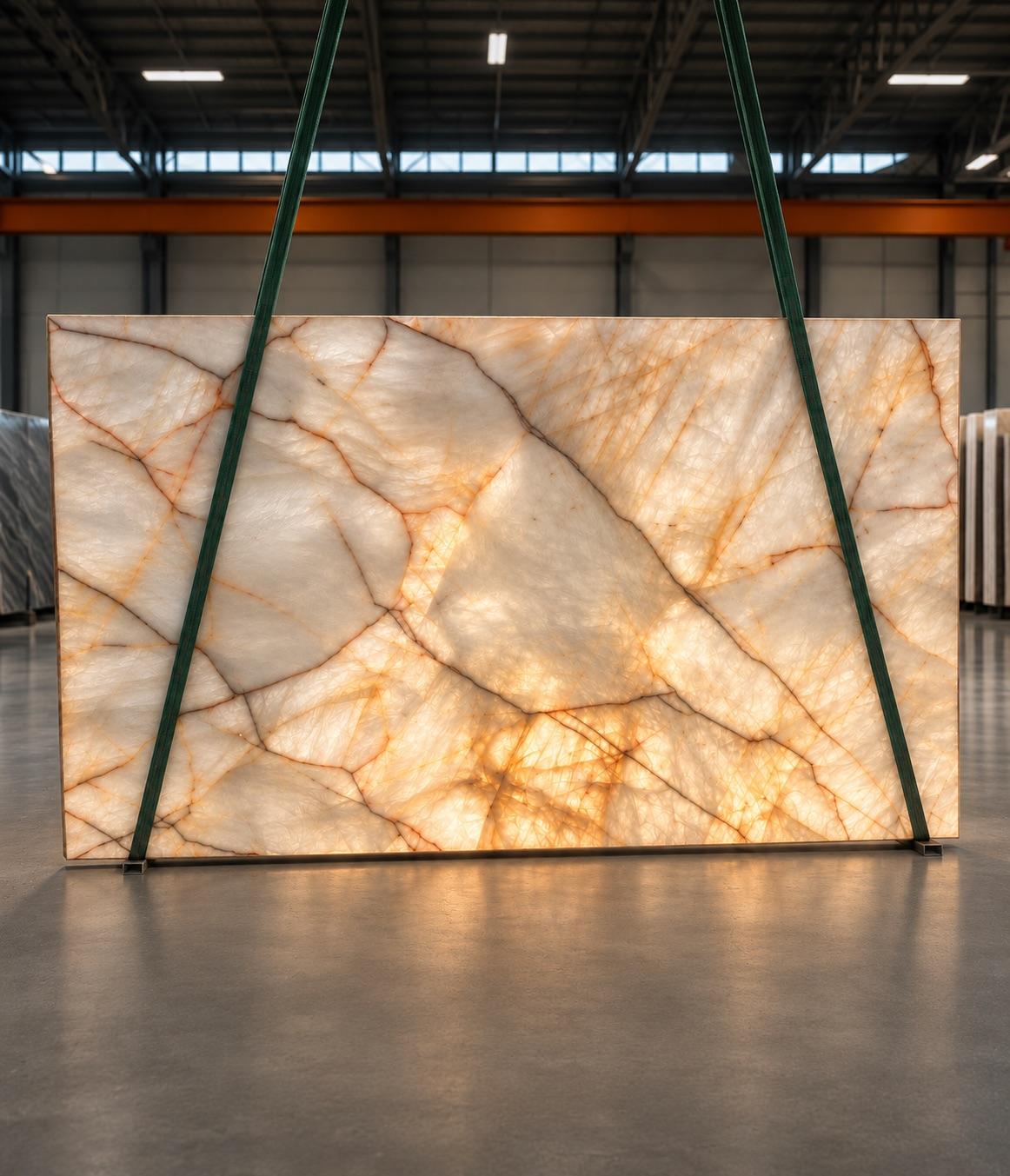
Some varieties of Cristallo feature crystalline areas interspersed with more opaque inclusions, producing stronger contrasts. Light passes through the translucent sections at different intensities, while denser areas retain a more defined visual presence.
Uniformity is not always the goal. With some stones, the interplay between illuminated and opaque areas is precisely what makes backlighting so compelling.
Agate and other semi-precious stones, found in the Margraf / Taurini collections, are also suited to elements designed to be viewed up close, where the details of their mineral patterns can be appreciated. On a countertop or decorative panel, backlighting can reveal shifts in colour and translucency within just a few centimetres.
The options extend beyond naturally translucent materials. Certain white marblesand varieties of travertine can also be backlit, provided the right slabs and processing techniques are selected.
In these cases, thickness is particularly important. Reducing the thickness of a stone that is normally only slightly translucent can allow more light through, making applications possible that would not work with a conventional slab thickness.
But transmitting more light does not necessarily show the stone at its best. A thickness of 20 mm, for example, often provides a good balance between translucency and visual depth. It allows the stone's subtle colour variations, layers and substance to remain apparent, without the lighting effect overpowering its natural character. Making the slab thinner can increase light transmission, but it may also diminish the sense of depth that gives natural stone its appeal. Thinner stone also behaves differently from a structural standpoint and may require specific support systems.
Even after the stone type and thickness have been chosen, the selection process is not over. Mineral composition, density, inclusions and vein orientation can vary from slab to slab, even within the same block. Backlighting makes differences in density, colour and vein continuity more apparent than they might be under front lighting.
A slab that looks beautiful in daylight is not necessarily the best choice for backlighting. The selection must take both conditions into account: what the stone reveals at its surface, and what becomes visible when light passes through it.
Considering both conditions becomes especially important when a surface is made up of several slabs, and even more so when the project changes after the material has been selected. This happened on a backlit Onice Ivory wall-cladding project that we at Marmi Vrech worked on with Promotech. After the order had been approved, the client decided to extend the surface area.
With an industrially manufactured material, increasing an order may be relatively straightforward. With onyx, however, the same commercial name does not guarantee the same pattern or the same response to light. The additional slabs had to match those already selected, not only in colour but also in the arrangement of their bands and translucent areas. Otherwise, the extension could have appeared as a visible break in the design once the lights were switched on.
After sourcing the slabs, the next question was how to integrate them into the existing layout. We therefore focused on nesting: planning the position of each individual piece on the slabs before cutting. Nesting is often associated with reducing waste, but with highly patterned stone it also plays a compositional role, determining which section of the slab becomes each finished element and how the veins will run.
In the technical drawings for the extension, the outlines of the individual pieces are placed directly over photographs of the slabs. The production order, known internally as the OL (ordine di lavorazione), then records these decisions as production instructions: dimensions, quantities, orientations and references to the selected slabs.
These documents are not a simulation of the illuminated wall. They do, however, help resolve a decision that cannot be reversed once the stone has been cut: which part of each slab will occupy each position in the cladding. The end client may never see these documents, but the finished, illuminated surface will reflect the choices they record.
“Slab selection, nesting and production orders allow us to oversee the intended result before production begins. This is essential with backlit surfaces: anything you fail to control at the design stage will be revealed by the light once the work is complete.”
— Feliciano Misceo, Business Development Manager, Italy, Marmi Vrech
Selecting and processing the slabs is only part of the project. The other part is how light reaches the stone.
The distance between the LEDs and the stone, the arrangement of light sources, the use of diffusers and the colour temperature all affect the final appearance. An improperly designed system may leave individual LED points visible, create dark areas or emphasise unwanted differences between adjacent pieces.
Colour temperature, in particular, can significantly change the appearance of the material. Warm light may bring out the golden and amber tones of certain onyx varieties, while more neutral light may change the way their colours and layers are perceived.
The right approach also depends on the surface's intended role. A wall covering designed to provide diffused light requires different decisions from an element intended primarily to showcase the stone's natural pattern.
In hospitality interiors, for example, an onyx wall may contribute to the ambient lighting of a lobby, while a bar counter may be designed as the room's focal point. In a yacht owner's bathroom or a private residence, the same stone may call for softer lighting suited to a more intimate setting.
Other, less visible considerations are just as important: installation space, structural supports, heat dissipation and access to components for maintenance. In yacht interiors, where space is limited, coordinating materials, technical systems and furnishings calls for particular care.
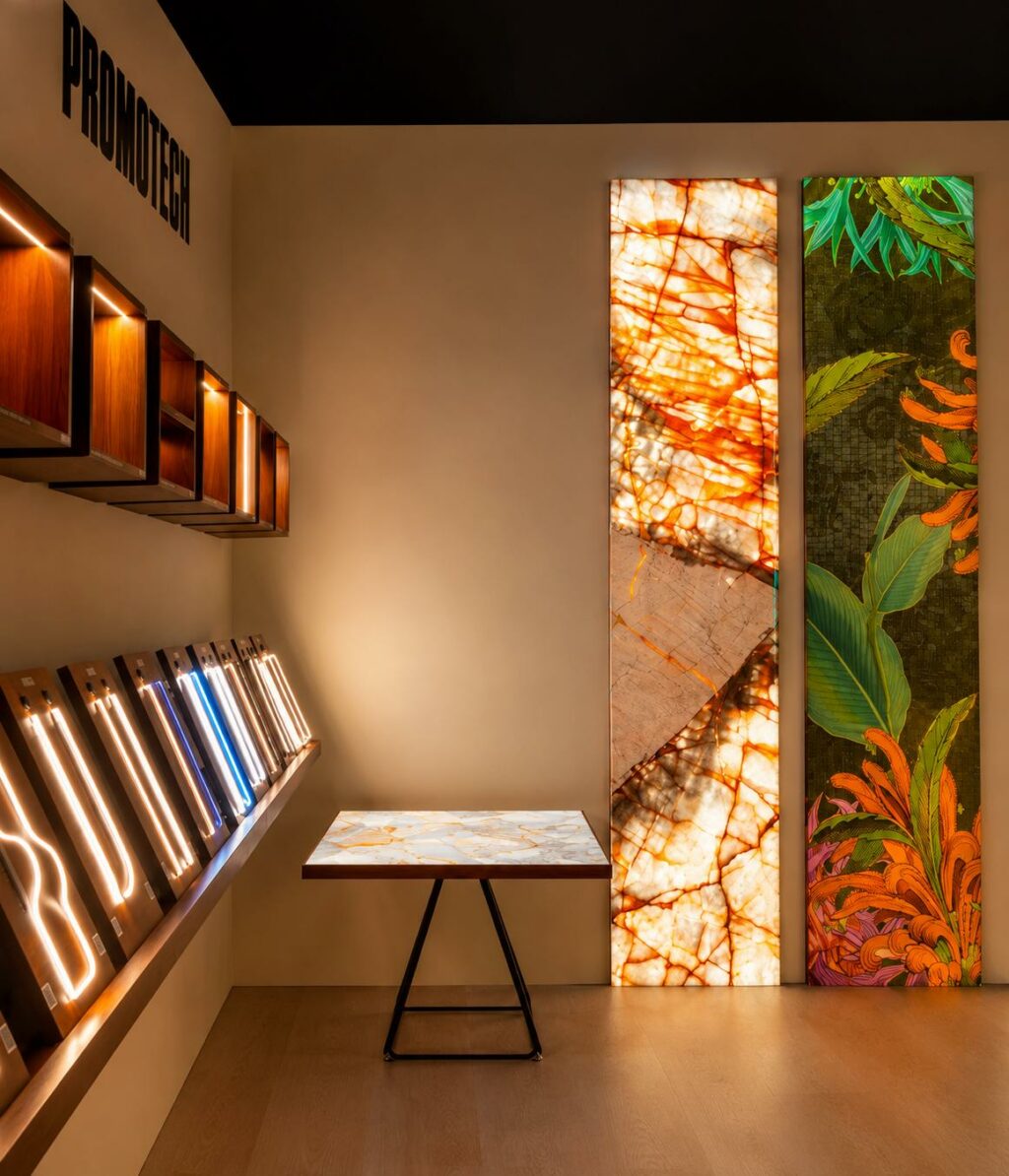
This close relationship between stone and lighting is the basis of Marmi Vrech's collaboration with Promotech, an Italian company specialising in bespoke lighting systems.
Marmi Vrech remains the main point of reference for developing the stone elements: selecting slabs, defining processing requirements and producing the finished pieces. Promotech works alongside us, providing specialist advice on light distribution and the integration of the lighting system.
The two companies bring different expertise, but some decisions need to be made together. Stone thickness, for example, affects how much light can pass through the material, as well as the processing methods and possible need for supports. Similarly, the distance required for effective light distribution can influence the space available and the construction details of the finished element.
Working through these questions together means exploring the options before one decision rules out another.
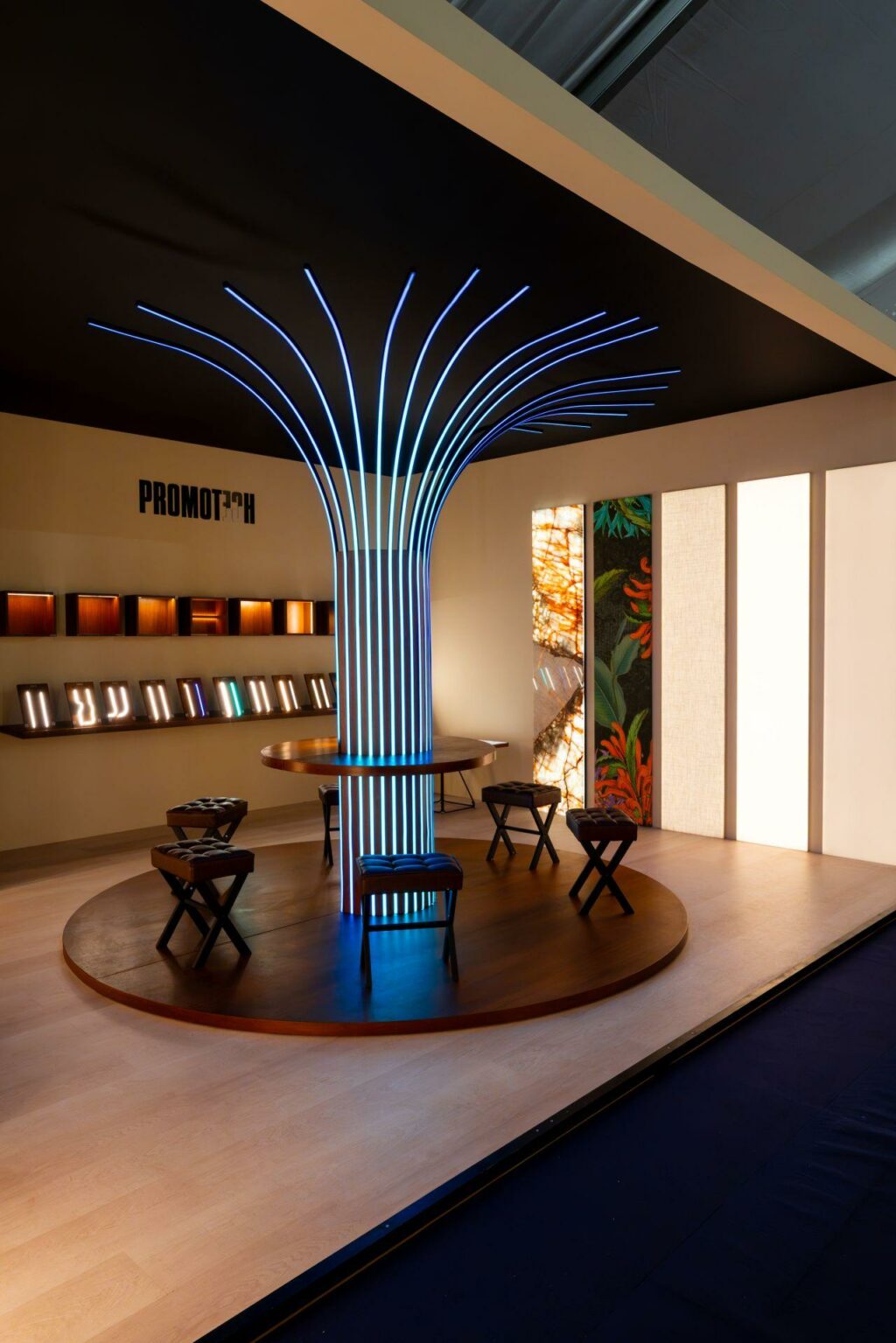
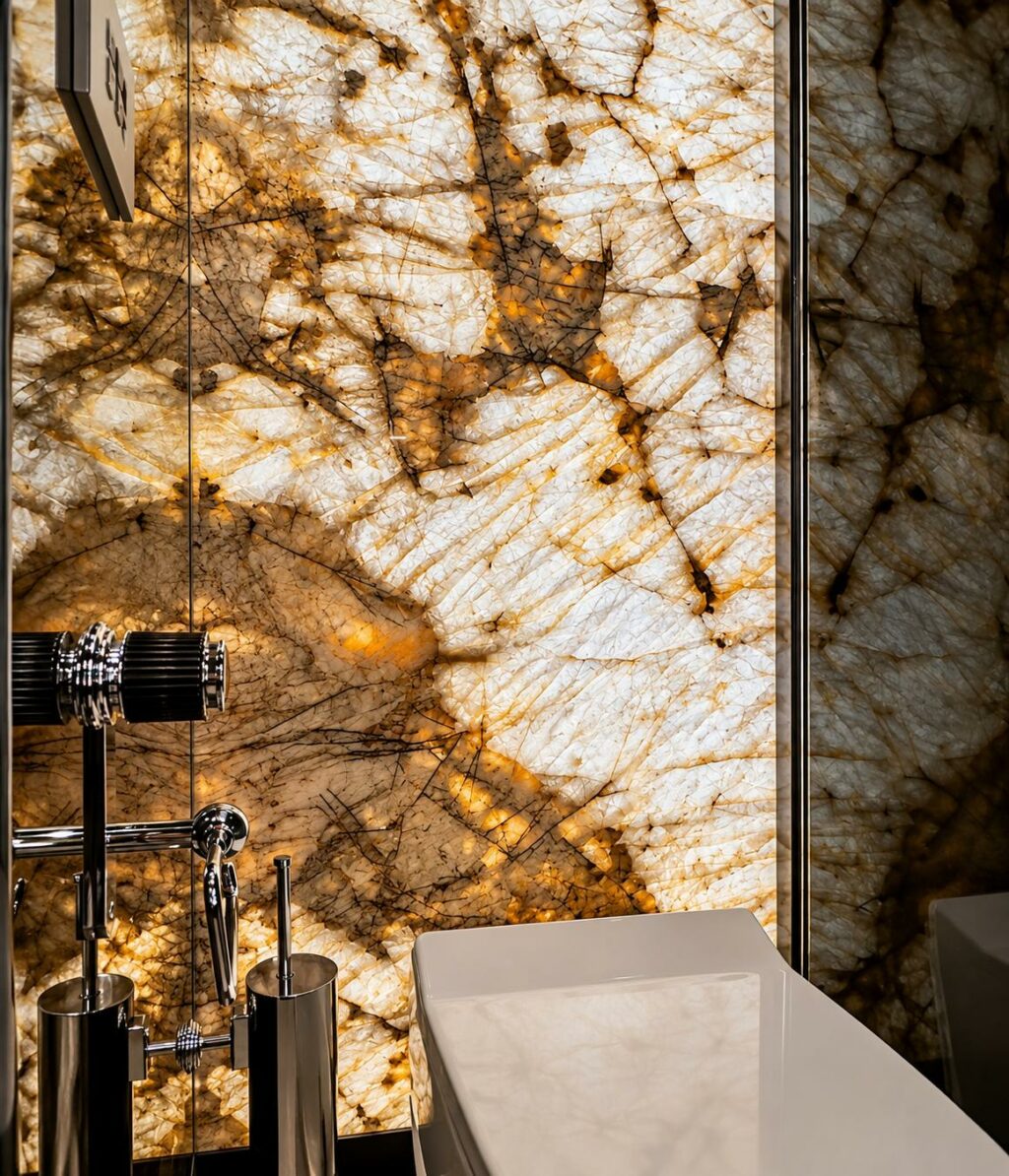
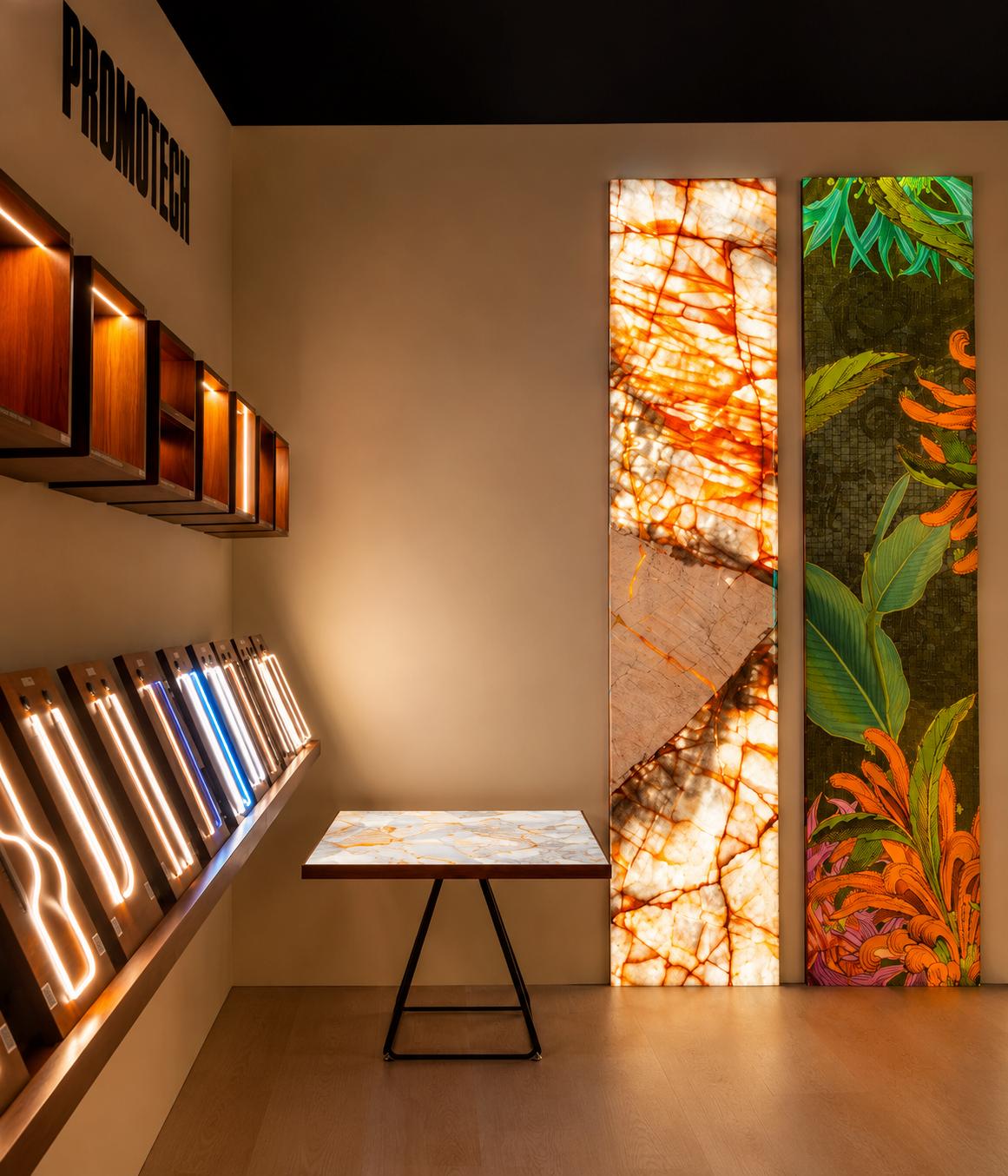
One example of this collaboration was on display at the Monaco Yacht Show 2026. At the Promotech stand, visitors could see a backlit Patagonia surface supplied by Marmi Vrech. The section of slab was selected by our Business Development Manager, Feliciano Misceo, together with Claudio Giampaoli, CEO of Promotech.
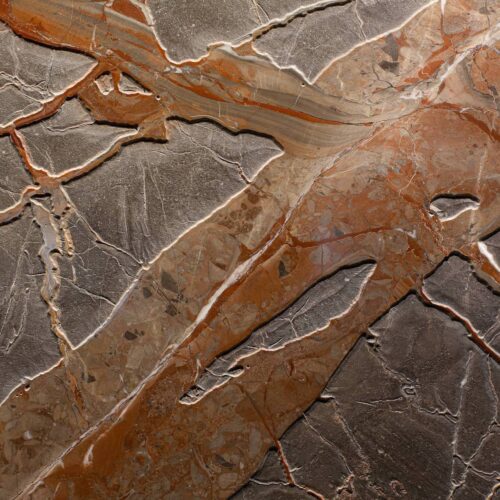
Patagonia combines crystalline sections with denser areas, creating strong natural contrasts. When backlit, the crystalline sections become brighter while the denser areas remain visually distinct. Rather than illuminating the stone evenly, the light makes its internal structure more apparent.
Trying to eliminate these differences would mean losing much of the stone's character. The aim is instead to control the lighting system while allowing the slab's natural structure to shape the composition.
“Choosing the stone and designing the lighting are closely connected stages,” Misceo explains. “The best results come when we work on both from the outset.”
A backlit surface must be assessed both with the lights on and with them off.When the backlighting is off, the stone's colour, veins and texture are seen under the room's ambient light. When it is switched on, its internal structure comes into view: some areas gain depth, others appear darker by contrast, and colours take on a different intensity.
The surface's role in the room can change too. A wall that sits quietly alongside other materials during the day may become the main focal point when illuminated. Alternatively, it can be designed to contribute to the lighting without dominating the space. The choice depends on how the designer wants the room to feel under different lighting conditions.
Both conditions must inform slab selection, especially when the backlighting will not remain on continuously. A slab that looks striking when backlit may be less convincing with the lights off, or vice versa. Good translucency alone is not enough: the stone must also work visually when the lighting system is switched off.
This is both a material and an architectural consideration, and it may lead to the selection of a different slab from the one initially preferred.
Backlighting adds another criterion to natural stone selection. Beyond colour, veining and finish, designers need to consider how the material transmits light and what role it will play in the space once illuminated.
For architects, this can change the selection process. A stone initially ruled out for its limited translucency may become an option at a different thickness. A slab chosen for its regular pattern may prove less suitable than a more irregular one that produces a lighting effect better suited to the design.
It also means asking the right questions while there is still room to make changes. Will the surface help illuminate the room, or will its role be primarily visual? Under what conditions will it be used? How much space is available for the light source, supports and maintenance access?
This is the stage at which Marmi Vrech and Promotech can bring their expertise together, from slab selection to lighting design, before materials and construction details have been finalised.
Backlighting does not change the stone itself. It reveals features that conventional front lighting leaves in the background.
With a backlit surface, the stone must be chosen twice: once in daylight and once with light shining through it.
Inspiration
A backlit onyx wall is ultimately judged when the lights are switched on. Yet much of what we see at that moment has already been decided: in...
Inspiration
A backlit onyx wall is ultimately judged when the lights are switched on. Yet much of what we see at that moment has already been decided: in...
Inspiration
A backlit onyx wall is ultimately judged when the lights are switched on. Yet much of what we see at that moment has already been decided: in...
Inspiration
A backlit onyx wall is ultimately judged when the lights are switched on. Yet much of what we see at that moment has already been decided: in...